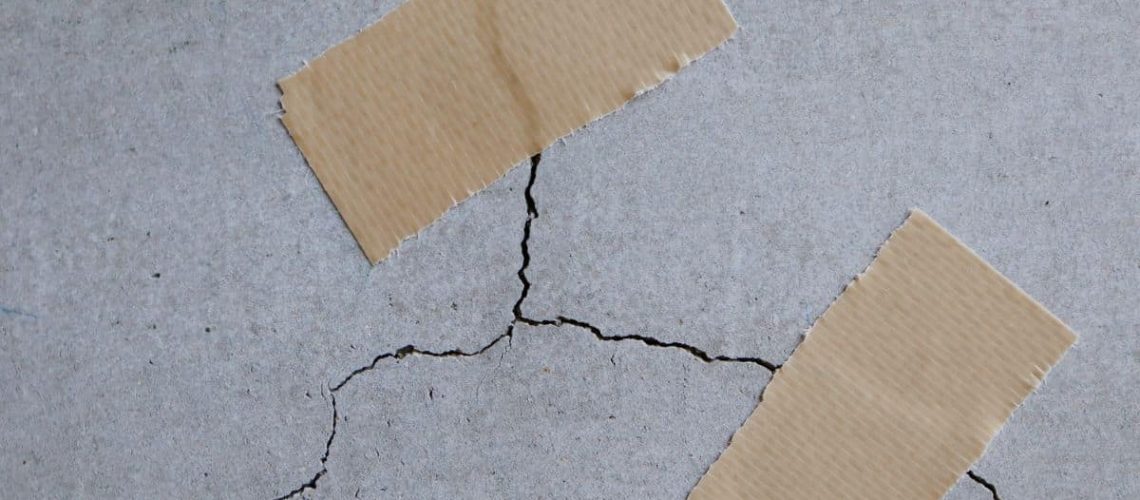
Not every foundation crack means something is seriously wrong. But some of them do, and telling the difference matters a lot when you are buying, selling, or living in a home.
The shape, size, direction, and location of a crack all tell you something about what caused it and how urgently it needs attention. In Northeast Texas, Southwest Arkansas, and Southeast Oklahoma, foundation movement is more common than in many parts of the country.
The clay-heavy soils here expand when wet and shrink when dry, putting consistent stress on foundations over time. Knowing how to read a crack is genuinely useful knowledge in this region.
Why Foundations Crack in This Region
Understanding what causes foundation cracks helps put what you are seeing in context.
- Normal concrete curing causes small shrinkage cracks as the concrete dries. These show up early in a home’s life and are usually not a structural concern.
- Soil movement is the bigger driver here. The expansive clay soils across NE Texas and the Ark-La-Tex swell during wet periods and contract when dry. That push and pull creates stress on foundations year after year. Drought followed by heavy rain is especially hard on foundations in this area.
- Poor drainage accelerates the problem. Water pooling against a foundation increases soil pressure, promotes erosion under the slab, and works its way into existing cracks over time.
- Poor grading and inadequate drainage are among the most common contributing factors inspectors find during foundation assessments across this region.
Types of Foundation Cracks and What They Mean
The type of crack is the first thing to look at. Different crack patterns come from different causes, and that affects how seriously you should treat them.
Hairline Cracks
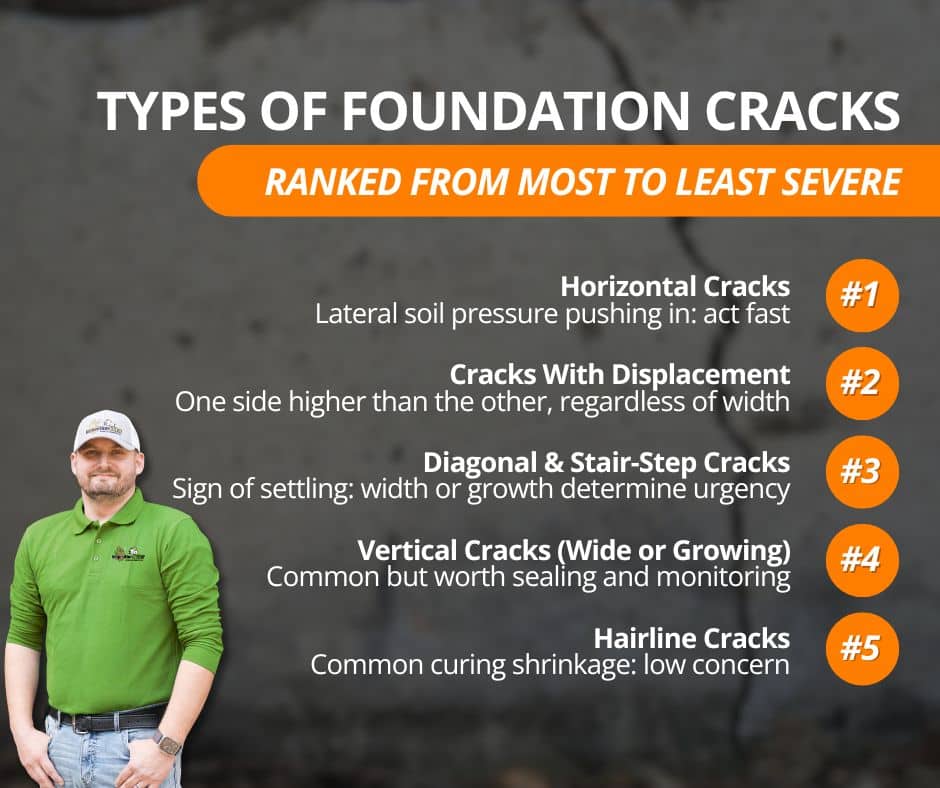
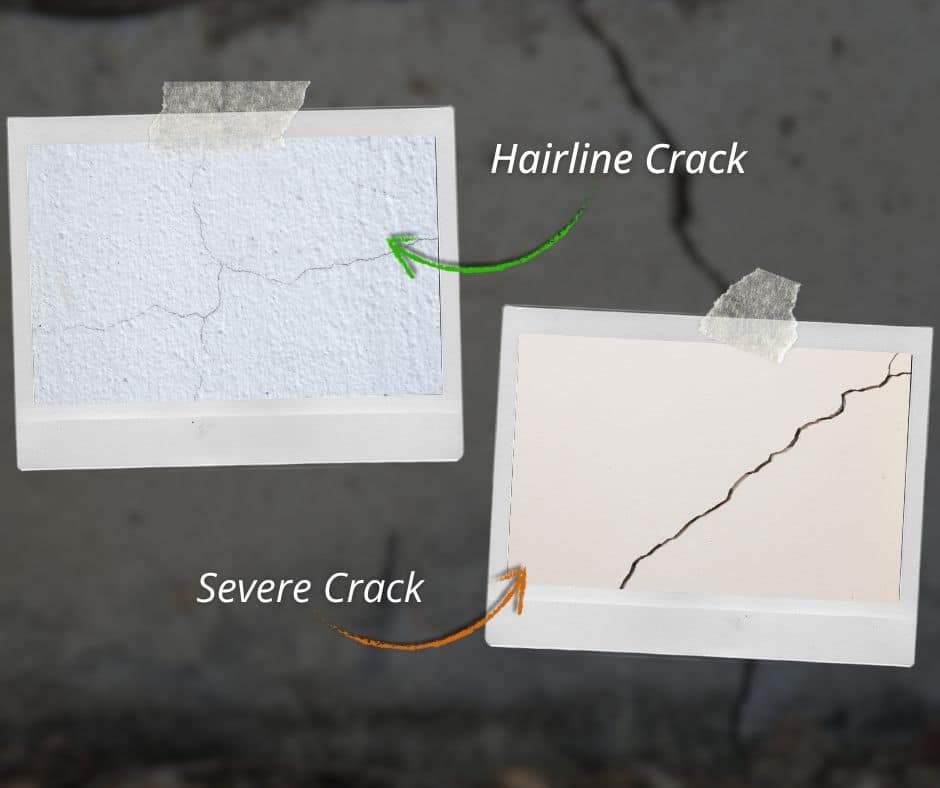
Hairline cracks are very thin, typically less than 1/16 of an inch wide, and appear on the surface of poured concrete or block foundations. Most result from normal concrete shrinkage during curing and are not a structural concern on their own.
That said, any hairline crack is worth monitoring. A crack that grows wider or develops displacement over time is telling you something has changed.
Vertical Cracks
Vertical cracks run straight up and down or close to it. They are among the most common types and often result from concrete shrinkage or minor settling.
A single narrow vertical crack near the center of a wall is usually a shrinkage crack. It is worth sealing to keep water out, but it does not automatically indicate a structural problem. Multiple vertical cracks, or a vertical crack that is wider at the top than the bottom, are worth having a professional evaluate.
Horizontal Cracks
Horizontal cracks are the most serious type. They typically mean the foundation wall is under lateral pressure from soil pushing in from outside.
In block or brick foundations, a horizontal crack along a mortar joint is a significant red flag. In poured concrete, a horizontal crack near the midpoint of the wall suggests bending stress. Left unaddressed, this type can progress to a bowing or buckling wall, which becomes a structural emergency quickly.
Diagonal and Stair-Step Cracks
Diagonal cracks run at an angle across a wall. Stair-step cracks follow mortar joints in a block or brick foundation in a staircase pattern. Both typically point to differential settling, meaning one part of the foundation has moved more than another.
Minor diagonal cracking near corners is common. Wider cracks, or cracks noticeably larger at one end than the other, indicate uneven settlement that needs a closer look. Differential settling is a frequent finding during home inspections in this region, given how much soil conditions can vary across a single lot.
Cracks With Displacement
Displacement means one side of a crack sits higher, lower, or further in than the other. This applies to any crack type.
When two sections of concrete are no longer moving as a single unit, that is a structural concern. Displacement automatically elevates the severity of any crack, regardless of how wide it is.
Visual idea: A simple Canva graphic showing the four crack types side by side: vertical, horizontal, diagonal, and stair-step, each with a brief severity label. Easy to scan and shareable.
How to Gauge How Serious a Crack Is
Crack type alone is not enough. These are the factors that together determine how urgently a crack needs attention:
- Width: Under 1/16 inch is typically minor. Between 1/16 and 1/4 inch is worth monitoring and possibly sealing. Over 1/4 inch warrants professional evaluation regardless of other factors.
- Direction: Horizontal cracks are the most serious. Diagonal cracks with significant width or displacement follow. Vertical cracks alone are typically the least structurally threatening.
- Displacement: Any offset where one side sits at a different level than the other raises significant concern, no matter how narrow the crack is.
- Location: Cracks near the center of a wall or at the base of the foundation are more concerning than surface cracks higher up or near corners.
- Change over time: A growing crack is more urgent than one that has been stable for years. Photograph and measure it today, then check again in three to six months. Active cracks need professional attention.
- Water intrusion: A crack letting in water is both a structural and a moisture concern. Even a minor crack that allows water entry should be sealed, and the drainage situation around the foundation should be addressed.
| Crack Type | Typical Cause | Severity |
| Hairline | Concrete curing, minor settling | Low, monitor |
| Vertical, narrow | Shrinkage, minor settling | Low to moderate |
| Vertical, wide, or displaced | Differential settling | Moderate to high |
| Diagonal / stair-step | Differential settling | Moderate to high |
| Horizontal | Lateral soil pressure | High, act promptly |
| Any crack with displacement | Structural movement | High, get it evaluated |
What Inspectors Look for & Why It Matters for Buyers and Sellers
Foundation condition is one of the most consequential items on any home inspection report, and understanding how inspectors approach it helps buyers and sellers know what to expect.
During a standard inspection, Inspection Gator evaluates all visible foundation components, documents any cracking by type, location, and observable severity, looks for signs of differential settling, and checks for evidence of water intrusion. When concerns come up, we communicate them clearly and specifically so you know exactly what you are dealing with before making decisions.
A home inspection identifies what is visible and what current indicators suggest. When findings point to something that needs more investigation than a visual assessment can provide, we say so directly and can point you toward the right next step, whether that is a structural engineer, a drainage specialist, or another expert.
For homes in Texarkana, Longview, Tyler, De Queen, Broken Bow, and surrounding communities, foundation assessment is a regular part of our work. The expansive soils here mean foundation concerns come up more consistently than in many other regions. Having an inspector who knows local conditions and has seen thousands of homes in this specific area makes a real difference in what gets caught and how it gets communicated.
Other Recommended Questions
What happens when a home inspection finds foundation concerns?
The inspector documents the findings in the report with notes on location, type, and severity. From there, buyers typically use the report to negotiate repairs or credits, request a specialist evaluation, or factor the findings into their decision. Sellers who already know about foundation issues and have addressed them are in a much stronger negotiating position.
Do new construction homes have foundation issues?
Yes, and it is more common than most buyers expect. New construction inspections catch settling, grading problems, and early cracking before they become bigger issues, and while the builder is still responsible for addressing them. Phase inspections during construction are the most effective way to catch foundation and drainage concerns before walls are closed up.
What do home inspectors check besides the foundation?
A standard home inspection covers the roof, attic, HVAC, plumbing, electrical, insulation, windows, doors, and exterior components, including grading and drainage. Foundation findings rarely exist in isolation. Drainage problems, crawlspace moisture, and exterior grading issues are often connected to what inspectors find at the foundation.
What is a sewer scope inspection, and when does it make sense?
A sewer scope inspection runs a camera through the underground sewer line to check for cracks, root intrusion, blockages, or pipe failure. It is worth considering alongside a standard home inspection on older homes or any property where drainage concerns, soil movement, or settling have been identified, since shifting soils can stress underground lines the same way they stress foundations.
When to Call a Professional
Some cracks can be monitored for a season before acting. Others need attention right away. Call a professional when:
- You find horizontal cracks anywhere on the foundation wall
- A crack shows displacement, or one side sits higher than the other
- A crack is wider than 1/4 inch
- Doors or windows that previously opened normally are now sticking
- Floors feel uneven or sloped in areas
- Water is entering through a foundation crack
- You are buying or selling a home and want an accurate picture of the foundation condition
At Inspection Gator, we have completed over 10,000 inspections across NE Texas, SW Arkansas, and SE Oklahoma. The foundation is a core part of each one. If you have a crack you are unsure about, getting a professional set of eyes on it early is always the right call.
Conclusion
Foundation cracks range from routine concrete behavior to early signs of serious structural movement. In the Ark-La-Tex region, where expansive soils and seasonal moisture swings make foundation movement a fact of life, knowing what you are looking at is the first step toward making the right call.
If you are buying, selling, or just want to understand what a crack in your foundation is telling you, contact Inspection Gator to schedule your inspection today.