Rain gutter damage usually shows up as sagging sections, gutters pulling away from the house, overflow during storms, leaks at the seams, and stains on the siding or fascia. The cause is almost always water that has nowhere to go, from clogs, loose hangers, poor slope, or downspouts that dump water next to the foundation. Small repairs are often affordable. Rotted fascia and soggy soil at the foundation are not.
Inspection Gator has inspected homes across Northeast Texas, Southwest Arkansas, and Southeast Oklahoma since 2008, and we see gutter problems on homes of every age. This guide covers the signs, the causes, what the damage can do, and when to call a pro.
Signs of Rain Gutter Damage
Most gutter damage is easy to spot once you know where to look. Walk around your house and look up at the roofline. Then watch your gutters during a moderate rain. Water should travel along the gutter and out of the downspout, not over the edge or behind it.
| What you see | What it usually means | How soon to act |
| A sagging or bowed section | Weight from water and debris, or failed hangers | Soon. It tends to get worse |
| A gap between the gutter and the fascia | Fasteners backing out, or rotted fascia | Soon |
| Water pouring over the edge in rain | A clog, poor slope, or an undersized gutter | Soon |
| Drips at seams, or holes and cracks | Failed sealant, rust, or age | Within a few weeks |
| Streaks, stains, or peeling paint on siding or fascia | Ongoing overflow or a leak | Soon |
| Pooled water, mud, or erosion next to the foundation | A downspout that is clogged or too short | Soon. It can affect the foundation |
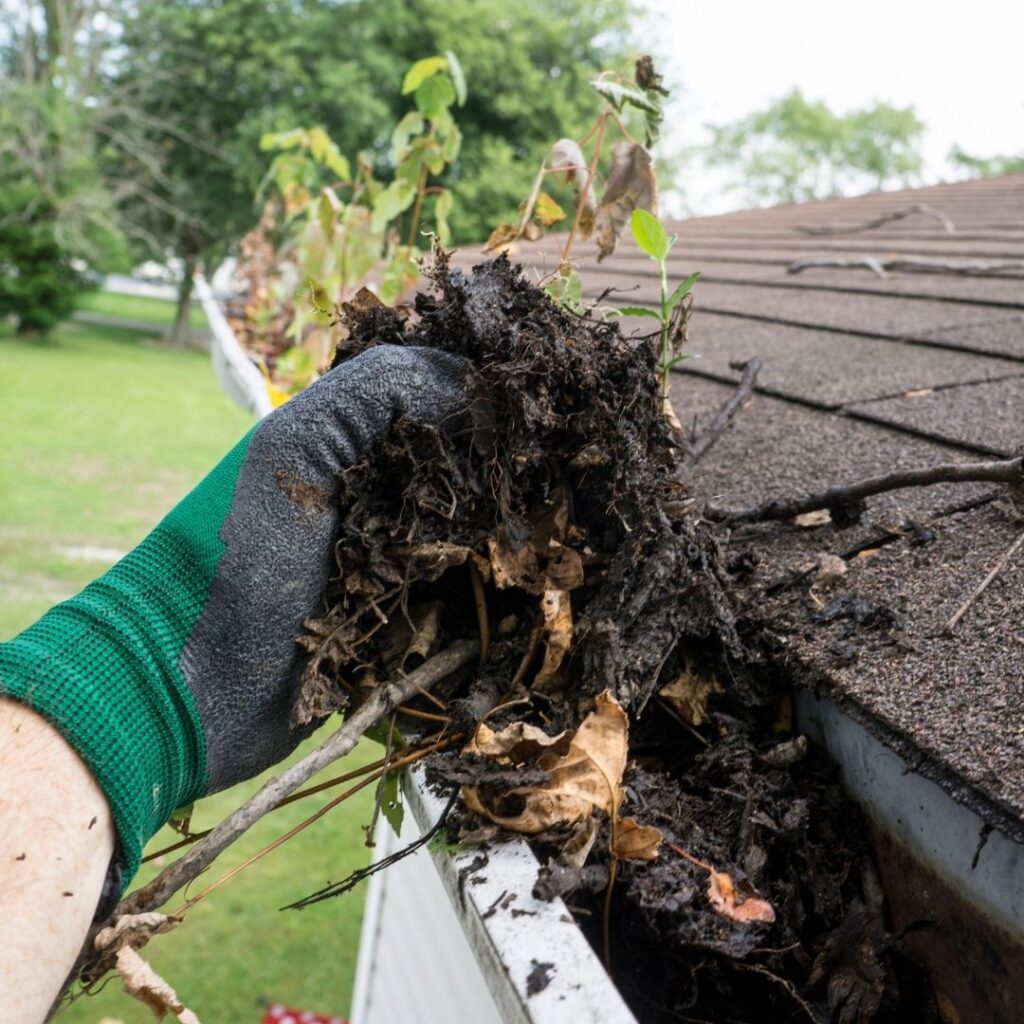
| Plants or weeds growing in the gutter | Debris holding moisture | Clean it now |
Check from the ground first. If you need a ladder to see a problem, or the damage is on a second story, read the section on when to call a professional below.
What Causes Rain Gutter Damage?
Gutters fail because of weight, water, and age. These are the most common causes:
- Clogs and debris. Leaves, seeds, and dirt hold water and add weight. A heavy gutter sags and can pull loose.
- Loose or failed hangers. Spikes and screws back out over time as wood and metal expand and contract. Rotted fascia cannot hold them either.
- Poor slope. Gutters need a slight tilt toward the downspouts. When a section sags or shifts, water pools, and that speeds up rust, algae, and seam leaks.
- Age and rust. Seams dry out, metal corrodes, and vinyl turns brittle.
- Storms and falling limbs. Wind, hail, and branches can dent, crack, or knock sections loose. Our post on hail damage to roofs shows what storm damage can look like up top.
- Missing flashing at the roof edge. When flashing is missing or damaged, water can slip behind the gutter instead of into it. Kick-out flashing is one example of a small part that sends roof water where it belongs.
- Freeze and thaw. Water in a crack can freeze and widen it. Hard freezes happen in our area, although heavy ice dams are less common here than farther north.
- Short or missing downspouts. This is not damage to the gutter itself, but water dumped beside the foundation causes erosion and wet soil.
How Rain Gutter Damage Harms Your Home
When a gutter fails, the water goes somewhere else, and it usually goes into something that was never meant to get wet.
- Fascia and the roof edge: Water behind a gutter soaks the fascia board and can rot the roof edge. A sagging or clogged gutter can also back water up under the shingles.
- Siding, windows, and doors: Overflow streaks and soaks the wall below it. That leads to peeling paint, wood rot, and mold on exterior surfaces.
- Foundation and soil: Downspouts that empty beside the house saturate the soil. Over time, that can add to erosion, settling, and cracking. Water pressure from wet soil can also contribute to bowing basement walls in homes that have basements.
- Crawl spaces, basements, and mold: Water that reaches the foundation can make its way inside. Damp spaces invite mold. If you are already dealing with it, our friends at EnviroGator can confirm whether moisture is active.
- Pests: Sagging gutters leave gaps at the fascia, and constantly damp wood attracts the wood-eating insects found in Texas homes.
Gutter and drainage problems also show up on inspection reports. If you plan to sell, fixing them first can help you avoid surprises during a buyer’s inspection.
Can You Fix Gutter Damage Yourself?
Some of it. Minor jobs are fine for a confident DIYer, but structural damage is better left to a pro.
Jobs that are usually DIY-friendly:
- Scoop out debris, then flush the gutter and downspout with a hose and watch where the water goes
- Seal small leaks at seams with gutter sealant, after cleaning and drying the area
- Replace loose spikes with longer screws, or add hangers where a section sags
- Add downspout extensions so water lands farther from the house
Jobs that call for a pro:
- Long sagging runs, or sections that have pulled away
- Rotted fascia or soffit
- Widespread rust or cracks
- Gutters on a second story or a steep roof
After any repair, run a hose into the gutter at the high end. Water should flow steadily toward the downspout, with no drips at the seams and no pooling along the way. If water backs up at the downspout, clear that clog before you call the job done.
Working on a ladder near a roof edge carries real risk. If you are not comfortable up there, hire someone who has the equipment.
Repair or Replace?
Repair when the damage is limited to one section or a few seams. Replace when the damage is widespread, the gutters keep failing, or they are near the end of their life. National repair guides commonly say vinyl lasts about 10 to 15 years, aluminum and steel about 25 to 30, and copper 50 or more.
Most repairs cost in the low hundreds of dollars, and a full replacement costs more. Get at least two quotes for anything beyond a small repair.
How to Prevent Rain Gutter Damage
A little routine work keeps small problems small.
- Clean gutters at least twice a year, in spring and fall, and after big storms. Fall cleaning works best once most of the leaves are down. Homes under tall trees may need more.
- Flush the system. Run a hose into the gutter and confirm that water leaves the downspout.
- Trim branches that hang over the roof.
- Check hangers, seams, and fascia after storms.
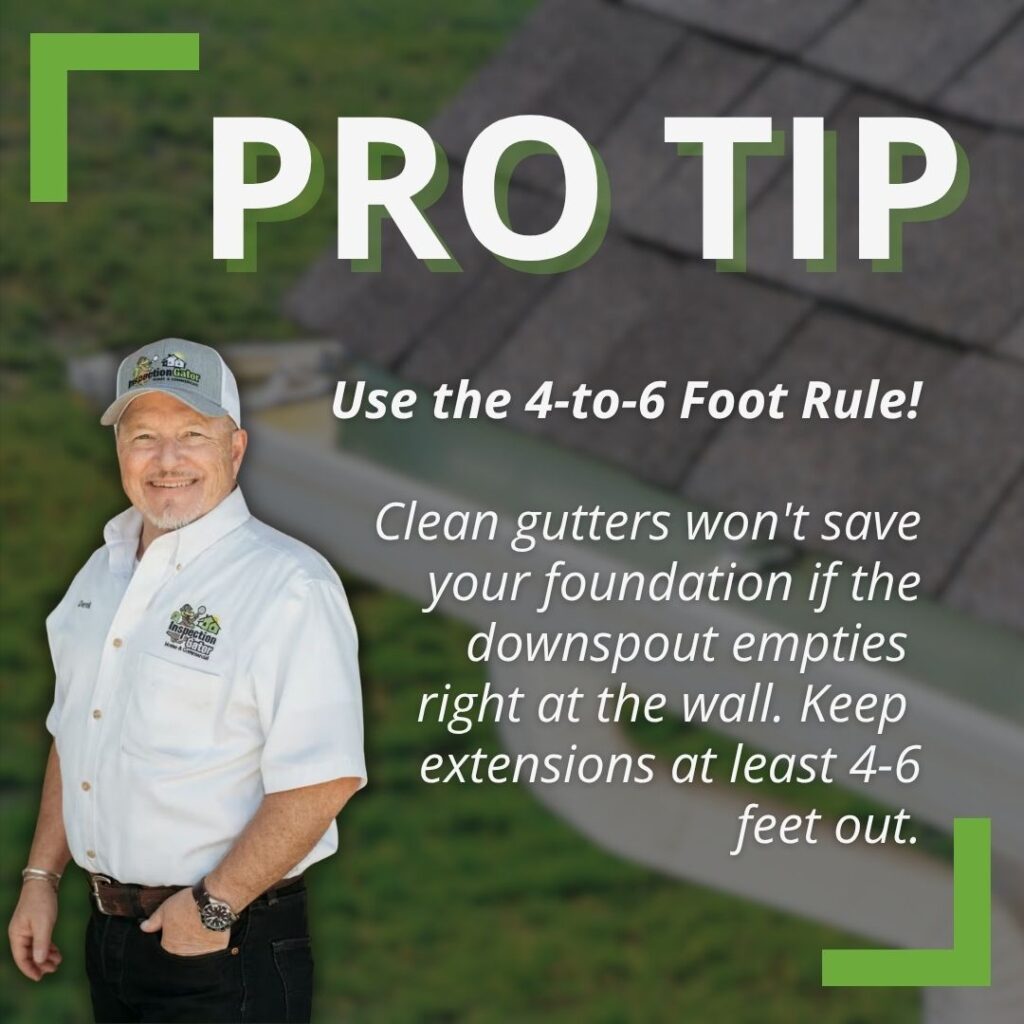
- Extend your downspouts. InterNACHI says downspouts should carry water 4 to 6 feet away from the foundation.
- Keep the soil sloped away from the house.
- Consider gutter guards if you get heavy leaf fall. They reduce cleaning but do not remove the need for it.
A simple seasonal checklist:
- Spring: Clean out winter debris and look for cracks, loose sections, or leaks at the seams.
- After storms: Scan the roofline for dents, gaps, and sections that shifted.
- Fall: Clean again once the leaves are down, and extend any short downspouts.
- Winter: Look for standing water or ice in cracks, and for stains that show a leak.
Fall is a good time for a full walk around the house. Clear the gutters after the leaves drop, extend the downspouts, and shut down your sprinklers before the first freeze.
Related Questions to Explore
- Can damaged gutters cause foundation problems? Yes. Damaged or clogged gutters can spill or leak water beside the house. That soaks the soil, and over time it can add to erosion, settling, cracks, and wet basements or crawl spaces. Short downspouts cause the same problem.
- How much does gutter repair cost? National cost guides commonly list gutter repairs at about $150 to $650, depending on the size of the job, the material, and the number of stories. Replacement costs more. Get more than one quote.
- Should I repair or replace damaged gutters? Repair when the problem is limited to one section or a few seams. Replace when the damage is widespread, the gutters are old, or the same spots keep failing. Material matters too, since vinyl wears out sooner than aluminum, steel, or copper.
- Why are my gutters pulling away from the house? Usually the fasteners can no longer hold the load. Weight from clogs and standing water pulls spikes out of the fascia, and rotted fascia makes it worse. Gutters sag before they pull away, so tighten or replace hangers early and check the wood behind them.
- How often should gutters be cleaned? At least twice a year, in spring and fall, plus after major storms. Homes under tall trees may need it more often.
- Does a home inspector check gutters? Home inspectors generally look at gutters and downspouts as part of the roof and exterior review. They note signs of poor drainage, such as stains, pooling, and short downspouts. Inspectors do not usually measure gutter slope or climb onto every section.
When to Call a Professional
Call a pro if you see any of these:
- Sagging, detached, or leaking gutters that keep failing after repairs
- Overflow even after a cleaning, which can point to slope, size, or downspout problems
- Soft, rotted, or peeling fascia or soffit
- Water in a basement or crawl space after rain, or pooling at the foundation
- Stains or water marks on ceilings or walls near the roofline
- Gutters on a second story or a steep roof
A home inspection looks at gutters and downspouts together with the grading, roof edge, siding, and signs of moisture near the foundation, so you see the whole drainage picture instead of one part. We find and document the problems. A gutter or roofing contractor then makes the repair.
Inspection Gator’s licensed inspectors serve buyers, sellers, and homeowners across our service area, with online reports within 24 hours and online scheduling any time.
Conclusion
Rain gutter damage starts small and gets expensive when it is ignored. Keep three things in mind:
- Watch for sagging, overflow, leaks, and stains, especially after storms.
- Clean and check your gutters twice a year, and make sure downspouts carry water 4 to 6 feet from the foundation.
- Call a pro for rotted fascia, long sagging runs, or water at the foundation.
Not sure what your gutters are telling you? Schedule a home inspection with Inspection Gator, and we will look at the whole drainage picture.