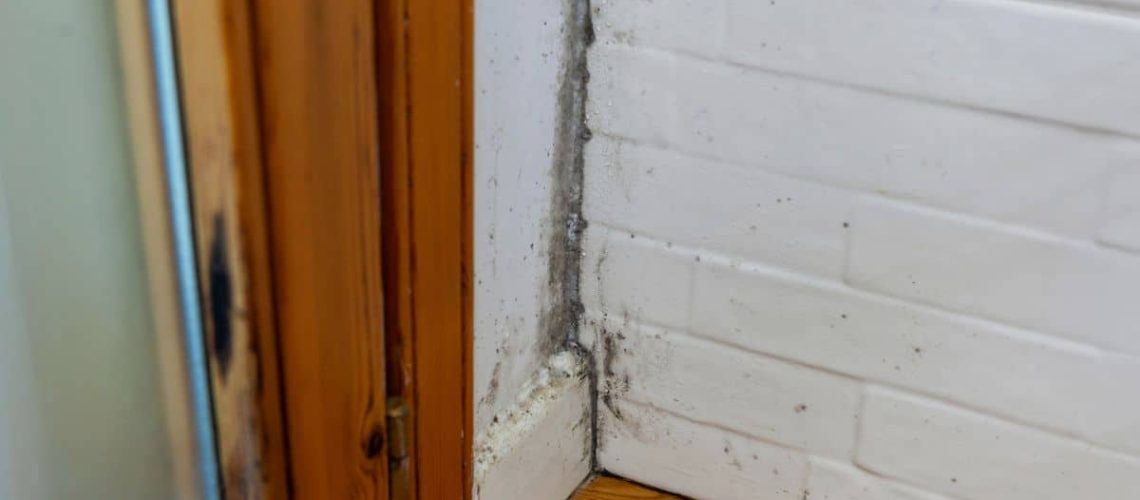
If you’ve spotted something dark growing near a window frame or noticed a powdery film on bathroom grout, you’ve probably wondered about the difference between mold and mildew. Most people use those words interchangeably, but they’re not the same thing.
One is generally a surface-level nuisance you can clean up yourself. The other can signal a deeper moisture problem that needs professional attention.
For homeowners in Northeast Texas, Southwest Arkansas, and Southeast Oklahoma, where humidity and warm temperatures are a given for much of the year, both show up more often than in drier climates. Knowing which one you’re dealing with helps you respond the right way.
What Is Mildew?
Mildew is a type of fungus that grows flat on the surface of materials. It doesn’t penetrate into what it grows on, which is what makes it easier to deal with. You’ll find it most often in damp areas with limited airflow, like bathroom tile, window sills, and outdoor furniture left in the shade.
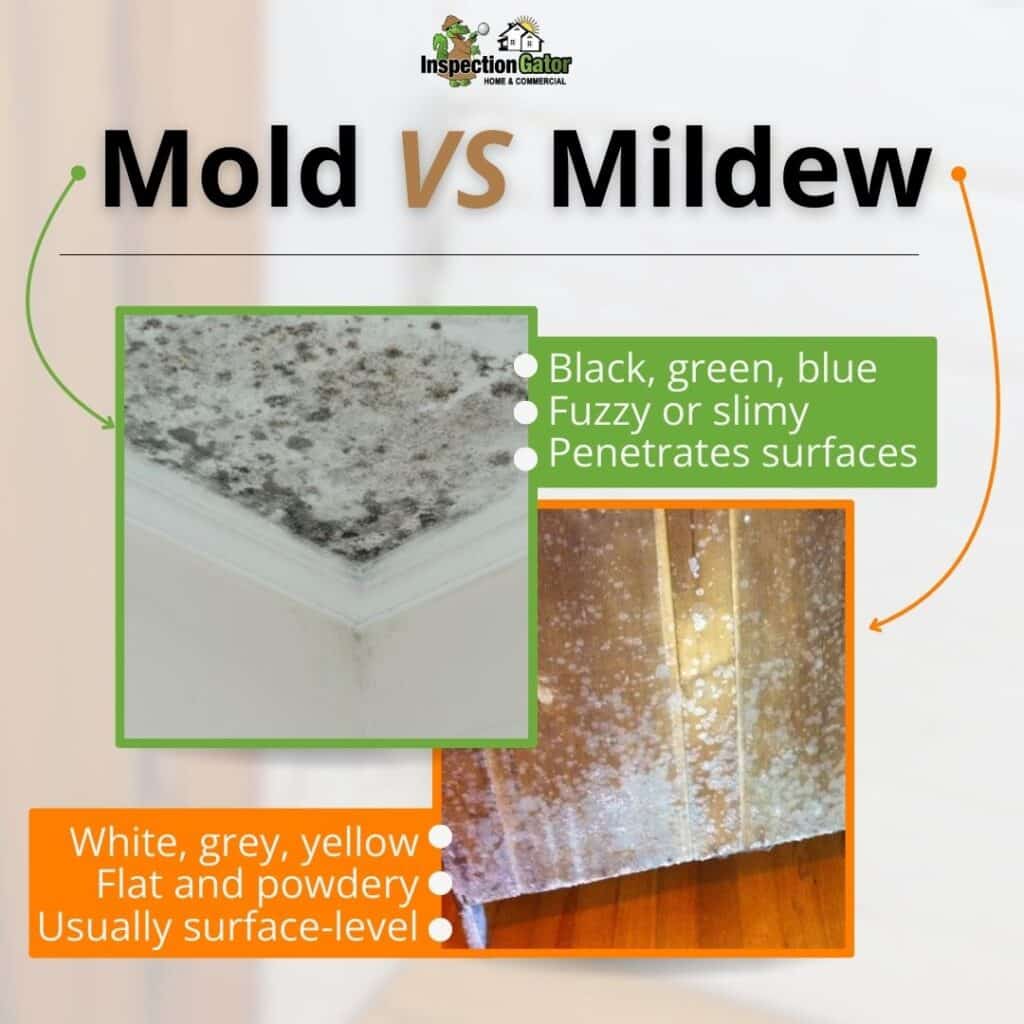
It typically looks powdery or fluffy and starts out white or gray, sometimes turning yellow or brown over time. The smell is musty but relatively mild. Because mildew stays on the surface, it usually responds to basic cleaning and better ventilation.
That said, recurring mildew is still a sign that moisture levels in your home need attention.
Common spots to find mildew:
- Bathroom tile grout and shower walls
- Window sills with condensation buildup
- Basement walls with minor dampness
- Fabrics or paper stored in humid spaces
How Mold Is Different
Mold is also a fungus, but it grows into the material it colonizes rather than sitting on top of it. It sends roots called hyphae down into porous surfaces like drywall, wood, carpet, and insulation. This is why mold is harder to remove and why cleaning the visible surface often isn’t enough.
Mold comes in many colors, including black, green, blue, and white. Color alone doesn’t indicate how dangerous it is. What matters more is where it’s growing, how much there is, and how long it’s been active. Mold spreads through airborne spores that land on damp surfaces and can begin growing within 24 to 48 hours when conditions are right.
Once it takes hold in a porous material, cleaning the surface removes what you see but leaves the root structure behind. That’s why mold tends to return if the moisture source isn’t found and fixed.
A Quick Side-by-Side Comparison
| Feature | Mildew | Mold |
| Growth pattern | Flat, surface-level | Penetrates into material |
| Common colors | White, gray, yellow | Black, green, blue, white |
| Texture | Powdery or fluffy | Fuzzy or slimy |
| Smell | Mild mustiness | Strong, earthy, or pungent |
| Common locations | Tile, grout, fabrics | Drywall, wood, insulation |
| DIY cleanup | Often reasonable | Depends on size and location |
| When to call a pro | Recurring or spreading | Anytime growth is suspected |
Differences In Smell
Smell is often the first clue. Mildew produces a mild, damp, musty odor, the kind you might notice in a bathroom without good airflow or a closet on an exterior wall. Mold tends to smell stronger, earthier, and more pungent. Some homeowners describe it as stale or rotting.
If the smell is coming from inside a wall, under flooring, or from a vent, that’s a bigger concern than surface mildew. A persistent odor you can’t trace to a visible source is one of the clearest signals to schedule a professional mold inspection and air quality test.
Health Effects
Both can affect indoor air quality, but mold carries more significant health risks, especially for people with allergies, asthma, or compromised immune systems.
Mildew exposure may cause mild irritation, like coughing or sneezing, that typically improves once you leave the space. Mold exposure can produce a wider range of reactions:
- Persistent nasal congestion and sinus issues
- Wheezing or difficulty breathing
- Eye irritation and skin rashes
- Headaches or fatigue that worsen indoors
- More serious respiratory symptoms for those with asthma or lung conditions
If anyone in your household has symptoms that improve when they leave home and worsen when they return, mold is worth investigating. That pattern is one of the most telling signs of an indoor air quality problem.
Why It’s a Bigger Issue in This Region
Both mold and mildew need moisture to grow, and the tri-state area served by Inspection Gator gives them plenty to work with. Summers are hot and humid, and homes that aren’t properly ventilated or climate-controlled can trap that moisture inside.
A few conditions that increase risk here:
- High outdoor humidity seeps into crawl spaces and attics during warmer months
- Older construction with less insulation and more air infiltration
- Frequent rain and storms can introduce moisture through small gaps in roofing, flashing, or foundations
- HVAC systems that haven’t been recently serviced and may have damp coils or clogged drain lines
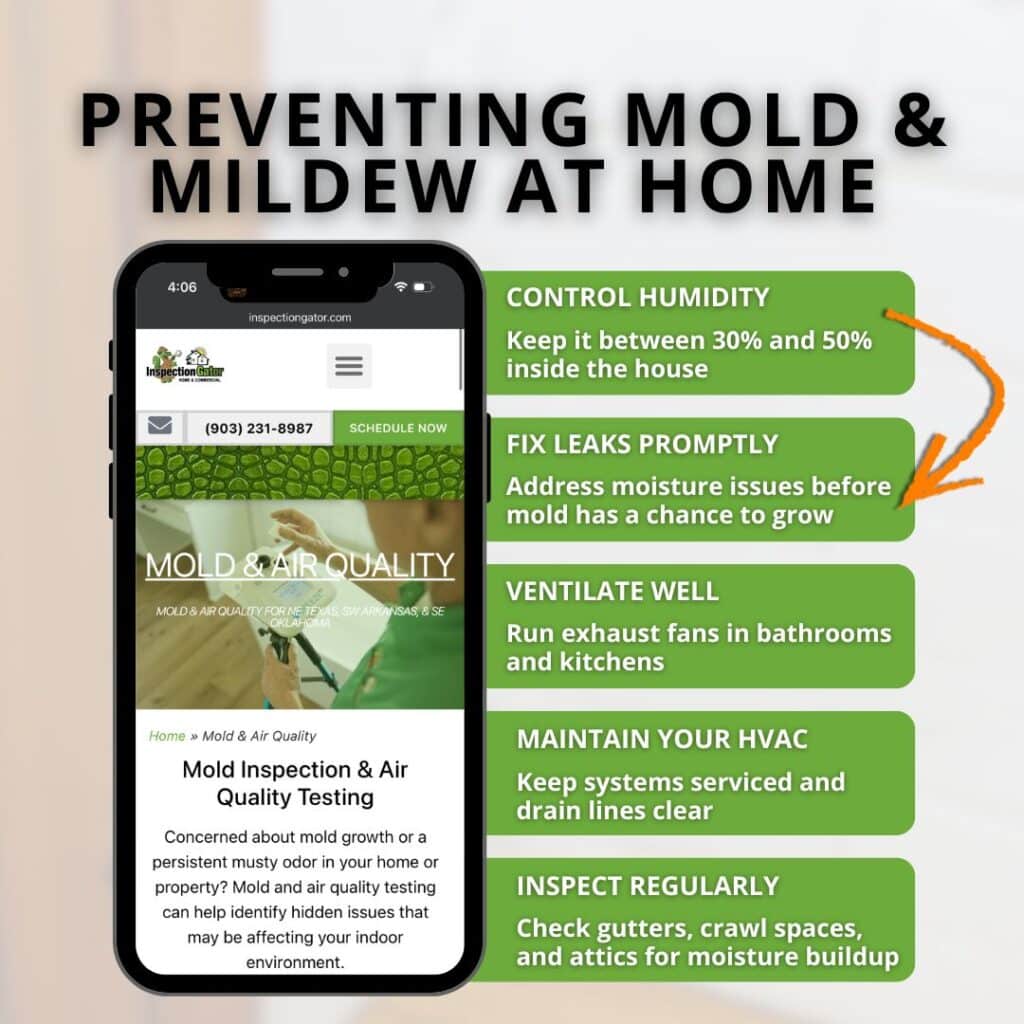
Maintaining indoor humidity between 30% and 50% is the standard recommendation for reducing mold and mildew growth.
A basic digital hygrometer can help you monitor levels at home. If your home regularly runs above that range, ventilation, dehumidification, and HVAC maintenance are worth reviewing.
Can You Clean It Yourself?
For small areas of mildew on hard, non-porous surfaces, DIY cleaning is usually reasonable. A diluted bleach solution or a commercial mildew cleaner will handle surface growth on tile and grout. Improving ventilation in the room helps prevent it from returning.
For mold, the answer depends on the situation.
The EPA generally suggests homeowners can address small areas, roughly 10 square feet or less, on hard surfaces with proper precautions, meaning gloves, eye protection, and an N95 mask, with the area sealed off to avoid spreading spores.
DIY cleanup is not appropriate when:
- The affected area is larger than 10 square feet
- Mold is growing inside walls, under flooring, or in HVAC components
- The moisture source hasn’t been identified or resolved
- Growth keeps returning after the cleanup
- Anyone in the home has respiratory conditions or immune vulnerabilities
Cleaning visible mold without fixing the moisture source is treating a symptom without addressing the cause. It will come back.
When to Get a Professional Mold Inspection
There are situations where professional inspection is the right next step, even if what you’re seeing looks minor.
Schedule a mold inspection when:
- You smell mold, but can’t find it visually
- You’ve had a leak, flooding, or plumbing issue
- You’re buying or selling a home in a humid climate
- Family members have unexplained allergy or respiratory symptoms
- You’ve cleaned visible mold, and it returned within weeks
Inspection Gator’s certified mold inspections use moisture meters, thermal imaging, and air quality sampling to find what eyes alone can miss. Air quality testing measures actual spore concentrations in your indoor environment, giving you lab-backed results rather than guesswork.
The two services work well together, and together they give you a complete picture of what’s happening inside your home.
Other Recommended Questions
Can mold affect a home inspection report?
Yes. Inspectors are trained to note visible mold growth, moisture staining, and conditions that indicate elevated risk. If mold is observed or suspected during a general home inspection, a dedicated mold inspection and air quality test is typically recommended as a follow-up.
What areas of a home are most likely to hide mold?
Attics, crawl spaces, and basements are the most common hidden locations because they trap moisture and often go unnoticed for long periods. HVAC systems, wall cavities near plumbing, and areas around roof penetrations are also frequent problem spots.
How does indoor air quality testing work?
Air sampling collects particles from inside your home, which are then analyzed in a lab to measure spore concentrations. Results are compared against outdoor baseline levels to determine whether indoor air quality is within a normal range or elevated enough to warrant remediation.
What causes recurring moisture problems in older homes?
Outdated insulation, deteriorating window seals, aging roofing materials, and inadequate ventilation are common culprits. Foundation settling can also create new entry points for water over time. A home inspection that includes thermal imaging can help identify where moisture is getting in.
Does mold affect a home’s value or sale?
It can. Buyers and their agents look for signs of mold during the transaction process, and undisclosed mold issues can complicate or delay closing. A pre-listing mold inspection gives sellers the chance to address problems before they become negotiating points.
When to Call a Professional
Some moisture and mold situations are manageable on your own. Others call for professional eyes, tools, and testing. If any of the following apply, a mold inspection or air quality test is the right next step:
- You smell mold, but cannot find a visible source
- Mold has returned after cleaning
- A leak, flood, or roof damage has affected your home
- You are buying or selling a property
- Family members have unexplained allergy or respiratory symptoms that improve away from home
- A previously vacant or water-damaged home is involved
Inspection Gator serves Northeast Texas, Southwest Arkansas, and Southeast Oklahoma with certified mold inspections, air quality testing, and full home inspections. The team uses moisture meters, thermal imaging, and lab-tested sampling to find what surface cleaning and visual checks miss.
Conclusion
Mold and mildew are related but meaningfully different. Mildew stays on the surface, responds to cleaning, and is more of a nuisance than a threat. Mold penetrates materials, spreads through spores, and can point to a serious moisture problem inside your home.
Both thrive in the warm, humid conditions common across the region, which makes awareness and routine home maintenance especially important in this region.
When something keeps coming back after cleaning, smells off, or can’t be traced to a visible source, a professional inspection gives you the answers you need to protect your home and everyone in it.