A 1-year home warranty is designed to protect homeowners from unexpected repair costs during the first year of ownership. Most homeowners understand that coverage exists, but far fewer understand how to use it effectively before it expires.
Many issues that qualify for warranty repairs do not appear right away. A pre-expiration warranty inspection, typically scheduled during the 11th month of ownership, helps homeowners identify concerns while coverage is still active.
It provides a clear, professional evaluation of the home’s condition and gives homeowners documentation they can use to address issues before deadlines pass. For homeowners across Northeast TX, Southwest AR, and Southeast OK, this inspection often plays a key role in protecting long-term home value and safety.
What Is a 1-Year Home Warranty Inspection?
A 1-year home warranty inspection is a full professional home inspection performed near the end of the initial warranty period, most commonly during the 11th month.
The purpose is to identify visible and accessible issues that may qualify for repair under warranty coverage.
This inspection differs from a buyer’s inspection in one important way. It evaluates how the home has actually performed over time, not just how it looked on move-in day.
During the first year, a home experiences:
- Daily use of plumbing, electrical, and HVAC systems
- Seasonal temperature changes
- Heavy rain events that test drainage and grading
- Normal settling of materials and structural components
These factors often reveal problems that were not visible during construction or at closing.
A typical pre-expiration warranty inspection evaluates:
- Foundation and visible structural components
- Roof coverings, flashing, attic conditions, and drainage
- Exterior siding, trim, windows, and doors
- Plumbing fixtures, drainage, and visible supply lines
- Electrical systems and safety components
- Heating and cooling performance and installation quality
The final inspection report provides clear descriptions and photos that homeowners can reference when communicating with builders or warranty providers.

Why the 11th Month Is the Ideal Time
Most builder warranties follow strict timelines. Coverage may include different terms for workmanship, systems, and structural components, but all include deadlines for reporting issues.
The 11th month is ideal because it gives homeowners enough time to:
- Identify issues before coverage expires
- Submit claims while warranties are still active
- Allow time for builder review, repairs, or follow-up
Scheduling too early can mean missing problems that have not developed yet. Scheduling too late can mean losing eligibility altogether.
Once warranty coverage expires, responsibility for repairs typically shifts to the homeowner, even if the issue began earlier.
What Do Home Warranties Generally Cover?
One of the biggest challenges homeowners face is misunderstanding warranty coverage.
A warranty does not mean everything is automatically repaired. Coverage depends on specific terms, timelines, and documentation.
Most warranties focus on defects related to workmanship, installation, or early system failures. Normal wear, homeowner maintenance issues, and cosmetic concerns are often excluded.
A 1-year inspection helps clarify:
- Which issues may qualify for warranty consideration
- Which items may require future homeowner maintenance
- Which concerns should be monitored over time
This clarity helps homeowners focus their efforts on realistic next steps instead of making assumptions about coverage.
Key Benefits of a 1-Year Home Warranty Inspection
A 1-year home warranty inspection is not about nitpicking or creating a long to-do list.
It’s about understanding how the home has performed during its first year of real use and identifying issues that matter while coverage is still in place.
The benefits go beyond spotting obvious defects.
It Identifies Problems That Develop After Move-In
Many home issues do not show up immediately. Research from the National Association of Home Builders shows that a large portion of warranty-related concerns arise near the end of the first year, after homes have experienced seasonal changes and regular use.
Examples include drainage problems that only appear after heavy rain or HVAC issues that become noticeable during extreme temperatures.
An inspection provides a systematic evaluation of the entire home rather than relying on visible symptoms alone.
It Creates Clear Documentation for Warranty Claims
Warranty providers typically require written documentation to evaluate claims. A professional inspection report includes:
- Written descriptions of concerns
- Photos showing conditions
- Clear locations and references
This documentation helps establish that issues were identified while coverage was still active. It also reduces confusion when communicating with builders or warranty administrators.
It Can Prevent Expensive Out-of-Pocket Repairs
Some of the most costly early-life home defects involve roofing, HVAC systems, plumbing, and drainage. These are also components that are commonly covered under builder warranties.
Identifying and addressing qualifying issues early can save homeowners from paying for repairs that might otherwise fall on them after coverage expires.
It Helps Homeowners Plan Ahead
Not every issue discovered will qualify for warranty repair. Even so, the inspection provides value by helping homeowners understand what may need attention in the future.
This allows homeowners to:
- Budget for upcoming maintenance
- Prioritize repairs based on severity
- Avoid surprise expenses
Knowing what to expect reduces stress and supports better long-term homeownership decisions.
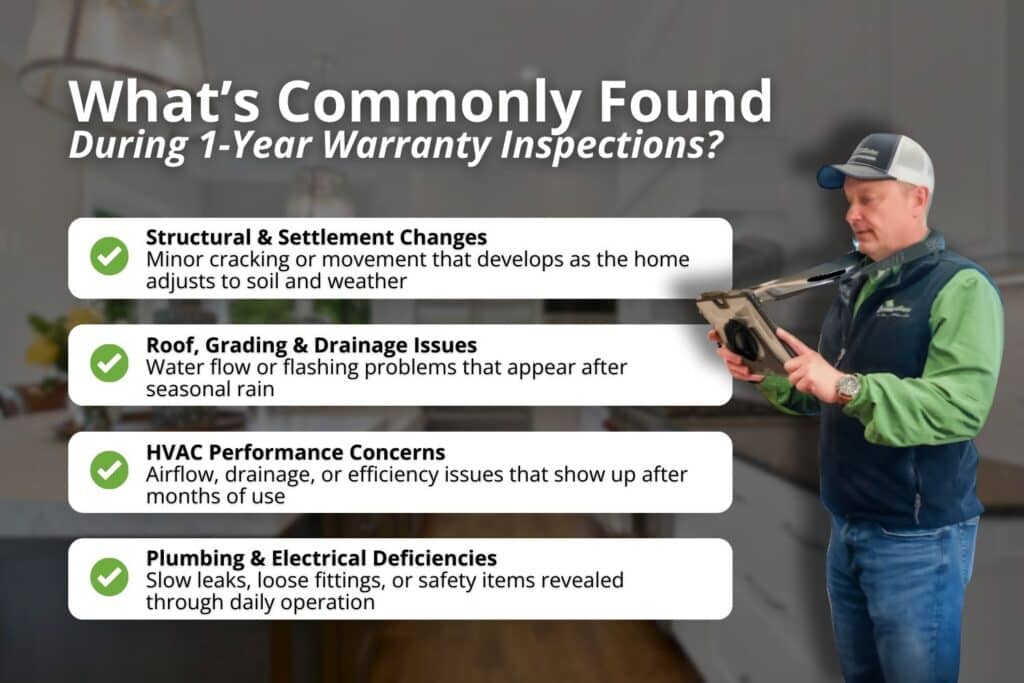
Common Issues Found During 11th-Month Inspections
While every home is unique, inspectors frequently identify similar concerns during 1-year warranty inspections.
Structural and Foundation Observations
Minor cracking or settlement may appear as the home adjusts to soil conditions and weather. While not all movement is serious, documenting these conditions during the warranty period can be important if structural coverage applies.
Roof and Drainage Concerns
Improper grading, drainage patterns, or flashing details often become noticeable after seasonal rain. Early roof-related issues can lead to leaks if not addressed.
HVAC Performance and Installation Issues
Heating and cooling systems may operate at move-in but reveal airflow, drainage, or efficiency problems over time. These issues are commonly identified during 11th-month inspections.
Plumbing Leaks and Drainage Problems
Slow leaks under sinks, loose fittings, or drainage issues may not be obvious during daily use. Left unaddressed, water-related problems can cause damage beyond the warranty period.
Electrical Safety Concerns
Loose outlets, missing safety devices, or improper installation practices can become apparent after months of use.
How This Inspection Differs From a Buyer’s Inspection
A buyer’s inspection helps you decide whether to purchase a home. A 1-year home warranty inspection helps you protect the home you already own.
Instead of focusing on negotiation, this inspection focuses on performance, timelines, and documentation. It evaluates how systems have aged, not just whether they met standards at the time of purchase.
This makes the inspection especially valuable for homeowners approaching warranty expiration.
Why New Construction Homes Benefit the Most
Many homeowners assume new construction homes do not need follow-up inspections. In reality, workmanship-related issues are among the most common warranty claims during the first year.
New homes experience:
- Material settling
- Seasonal expansion and contraction
- Drainage patterns that emerge over time
These conditions cannot be fully evaluated during a final walkthrough. A 1-year inspection provides oversight during a critical window when issues are most likely to surface.
What to Do After You Receive the Inspection Report
Once you receive your inspection report, review it carefully and focus on items that may fall under warranty coverage.
Common next steps include:
- Submitting the report to your builder or warranty provider
- Requesting repairs or further evaluation where applicable
- Tracking timelines for follow-up or responses
- Planning future maintenance for items outside coverage
Having clear documentation helps streamline communication and reduce misunderstandings.
Other Questions Homeowners Ask
Is a 1-Year Warranty Inspection Required?
Most warranties do not require an inspection, but they do require timely reporting of issues. An inspection helps homeowners meet that requirement more confidently.
Do Newer Homes Still Need a Full Home Inspection?
Yes. Even newer homes can have installation defects, drainage issues, or system problems that only appear after months of regular use. A full home inspection helps homeowners understand how the home is performing beyond what was visible at move-in or during a final walkthrough.
What Is the Difference Between a General Home Inspection and a Warranty Inspection?
A general home inspection looks at typical items that make up the overall condition of a home at a specific point in time. A warranty inspection focuses on identifying issues that may qualify for repair before coverage deadlines.
Both inspections provide value, but they serve different purposes depending on where you are in homeownership.
Can an Inspection Help With Ongoing Home Maintenance?
Yes. Inspection reports often highlight areas that need monitoring or routine upkeep, even if no immediate repair is required. This information helps homeowners plan maintenance and reduce the risk of bigger problems later.
When to Call a Professional
If your home is approaching the end of its first year, waiting too long can limit your options. Warranty deadlines are firm, and issues discovered after expiration are often no longer eligible for repair.
A professional inspection provides an objective evaluation and helps homeowners make informed decisions before coverage ends.
Inspection Gator provides comprehensive home inspections, including 1-year home warranty inspections, for homeowners across Northeast Texas, Southwest Arkansas, and Southeast Oklahoma.
Conclusion
A 1-year home warranty inspection gives homeowners clarity at a critical moment. By booking the inspection during the 11th month, you gain insight, documentation, and the opportunity to act while coverage is still in place.
For homeowners who want to protect their investment, reduce unexpected repair costs, and better understand their home’s condition, this inspection is a practical and proactive step. Schedule with Inspection Gator today.