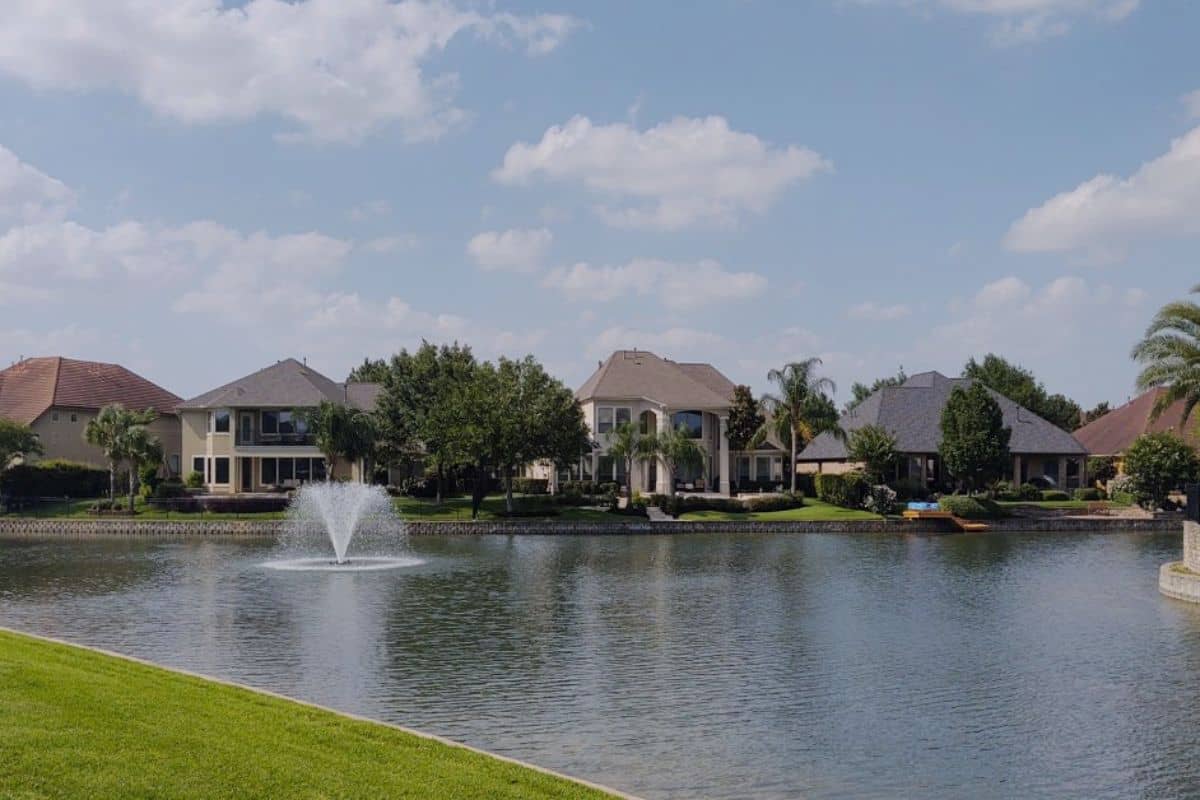
Buying a lake house in Texas means looking past the view to the things a regular home does not have: a septic system instead of city sewer, a dock and shoreline to maintain, a possible flood zone, and far more moisture in the air. Those extras are where the surprises hide.
At Inspection Gator, we inspect lake and river homes across our Texas service area, and the buyers who slow down to check these systems are the ones who avoid the expensive regrets. This guide walks through what to look at before you make an offer, from the water source to the dock to the flood map.
What Makes Buying a Lake House Different?
A lake house carries every risk a normal home does, plus a handful that come with living next to water. The view and the lifestyle are the easy part. The harder part is that waterfront homes often sit on private wells and septic systems, deal with constant moisture, face flood risk, and come with a dock and shoreline that need upkeep and sometimes permits.
That changes how you shop. A lake house that looks move-in ready can still hide a failing septic field, an eroding bank, or a flood-insurance bill that reshapes your budget. Before you fall for the sunset over the water, treat the property as a system and check each part. The sections below cover the ones that matter most in Texas.
Check the Septic System and Water Source
Many Texas lake and river homes are not on city water and sewer. They run on a private well and an on-site septic system, and both need a close look before you buy.
A septic system near water is also more tightly regulated, since a failing one can contaminate the lake. In Texas, on-site sewage facilities are overseen under state rules, and you can review the basics through the Texas Commission on Environmental Quality’s on-site sewage program (external link, opens in new tab).
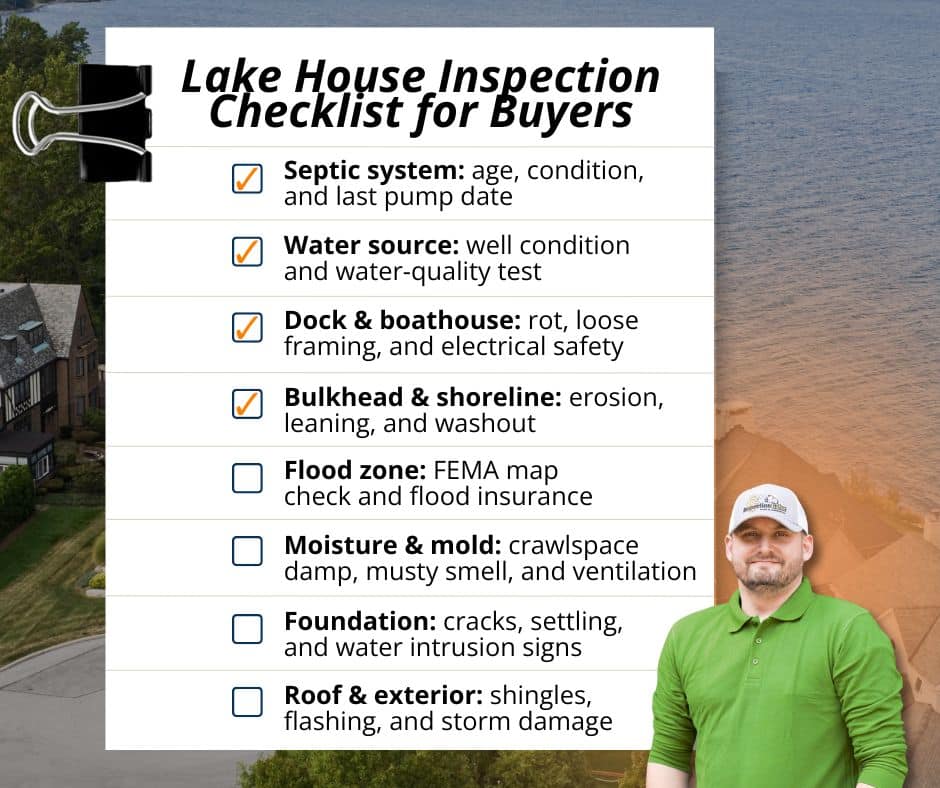
Before closing, you want to know:
-
- The age, type, and condition of the septic system, plus when it was last pumped
-
- Whether the drain field is sized correctly and sits a safe distance from the water
-
- The water source, and a recent water-quality test, if the home is on a well
-
- The condition of the supply lines and any pump or pressure tank
A standard home inspection does not always include a deep look at the septic and water systems, so add a dedicated septic, well, and sewer scope inspection. It is the single most overlooked check on a lake property and the most expensive one to get wrong.
Inspect the Dock, Bulkhead, and Shoreline
The waterfront features are part of what you are paying for, so inspect them like you would a roof. Start with the shoreline structures.
A bulkhead is a retaining wall built along the shoreline to hold the soil in place and stop the bank from washing into the water. A seawall does the same job with heavier construction. These structures often deteriorate gradually before significant failure becomes obvious, and replacing one can cost tens of thousands of dollars. Look for leaning, cracking, rusted tie-backs, and soil washing out behind the wall.
Then check the rest of the waterfront:
-
- Dock condition: rotten boards, loose framing, corroded hardware, and electrical safety if the dock has power or a lift
-
- Shoreline erosion: bare or undercut banks, exposed roots, and slumping soil
-
- Permits and ownership: Many Texas reservoirs are publicly owned and managed by river authorities or other governmental entities, so the dock and shoreline use may require a permit or lease rather than being something you simply own, depending on the lake.
Get clear on what is conveyed with the sale and what is permitted before you sign, because a dock built without approval can become your problem.
Know the Flood Zone and Flood Insurance
If the home sits in a flood zone, your lender will likely require flood insurance, and that cost belongs in your budget from day one. Standard homeowners’ policies do not cover flood damage. Check the property’s flood risk on the official FEMA Flood Map Service Center (external link, opens in new tab) before you make an offer, and get a flood-insurance quote early so there are no surprises at closing.
While you are at it, look at how the land sheds water. Does the lot slope toward the house or away from it? Are there signs of past high water, like stain lines on the foundation, a deck, or outbuildings? A home that has flooded before often shows subtle evidence if you know where to look, which is part of what a waterfront-aware inspection checks.
Watch for Moisture, Mold, and Foundation Issues
Living next to water means living with more humidity, and humidity is what drives most hidden problems in a lake house. Damp crawlspaces, condensation, and poor ventilation create the conditions for mold and wood rot. If you notice a musty smell or signs of past dampness, treat it as a flag, not a quirk.
A few things to watch for:
-
- Mold or mildew in crawlspaces, closets, and around windows. If you find it, a mold inspection can help determine the extent of the problem and whether additional testing is appropriate, and what comes after testing and remdiation, if needed. These details are worth understanding before you buy.
-
- Wood-destroying insects are attracted by constant moisture, which draws them in. Damp framing is one of the clearest signs of wood-eating insects in a home.
-
- Foundation movement, which can occur because of expansive Texas soils, changing moisture levels, and seasonal fluctuations in groundwater.
Catching these before closing gives you room to negotiate repairs or walk away, rather than inheriting them.
Related Questions to Explore
What should you look for when buying a lake house?
Look beyond the view at the systems unique to waterfront homes: the septic system and water source, the dock and shoreline structures, the flood zone, and signs of moisture or mold. These are the items that cost the most to fix and are easiest to miss on a quick walk-through.
Is buying a lake house a good investment?
A lake house can hold value well and earn rental income, but the ongoing costs are higher than those of a typical home. Budget for flood and higher homeowners insurance, dock and shoreline upkeep, septic maintenance, and seasonal repairs. A clear-eyed inspection helps you price those costs before you commit.
What is a bulkhead on waterfront property?
A bulkhead is a retaining wall built along the shoreline to hold the soil in place and prevent the bank from eroding into the water. It is a major structure on many lake properties, and a failing one is expensive to replace, so it should always be inspected before purchase.
Do waterfront property owners own the water in Texas?
Usually not. Many Texas lakes are state water managed by river authorities, and waterfront owners typically own to a boundary near the shoreline rather than the water itself. Dock and shoreline use may require a permit or lease, so confirm the rules for that specific lake before you buy.
Do you need a special inspection for a lake house?
You need a standard home inspection plus waterfront-specific checks: a septic and well inspection, a look at the dock and shoreline structures, and a moisture and flood-risk review. A general inspection alone can miss the systems that matter most on the water.
When to Call a Professional
Call a home inspector as soon as your offer is accepted. A waterfront-aware inspection looks at the whole property the way a buyer needs it to: the structure and roof, plus the septic, well, dock, shoreline, drainage, and moisture conditions that come with lake living.
Pair a professional home inspection with a septic, well inspection, and a sewer scope if recommended so nothing on the property goes unchecked.
Inspection Gator inspects lake and river homes throughout our Texas service area, and we are happy to walk buyers through what we find so you can make the call with full information.
Work in real estate? Our team built a full guide to waterfront home inspections for agents:
Conclusion
A lake house in Texas is a wonderful place to own, as long as you buy it with your eyes open. Keep three things in mind:
-
- The biggest risks are the ones a regular home does not have: septic, water source, dock, shoreline, and flood exposure.
-
- Higher moisture means a higher chance of mold, rot, and foundation movement, so check for it early.
-
- A standard inspection is not enough for the water. Add the septic, well, and waterfront-specific checks.
Found a lake or river home you love? Schedule an inspection with Inspection Gator before you make an offer, and we will check the systems that make waterfront homes special, and occasionally expensive.