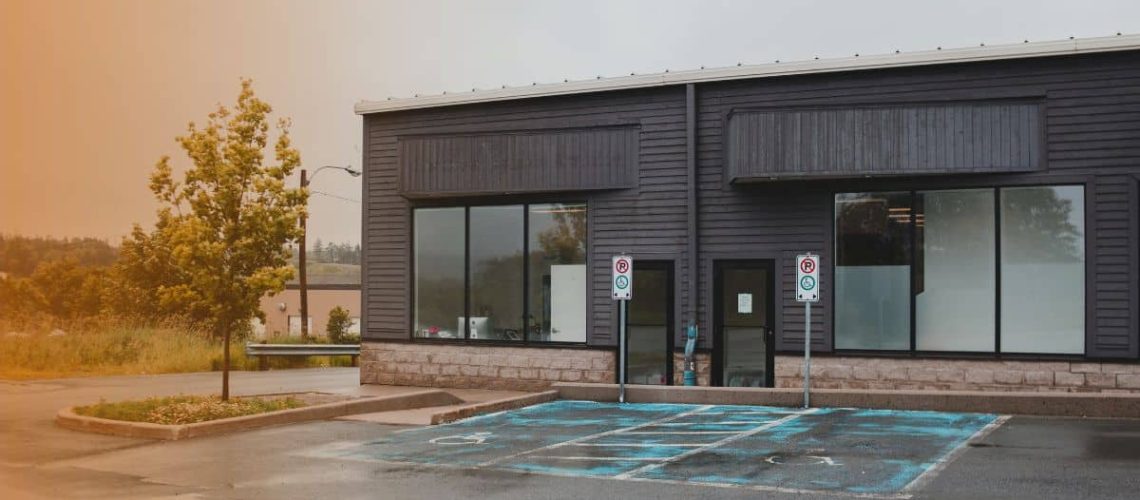
Commercial property inspections and residential home inspections might sound similar, but they’re completely different processes. Commercial building inspections involve larger systems, stricter standards, higher stakes, and a much broader scope than what you’d see in a typical home inspection.
Whether you’re buying a retail space in Texarkana, an office building in Shreveport, or a warehouse in Durant, understanding these differences helps you make smarter investment decisions and avoid costly surprises.
What Makes Commercial Inspections More Complex?
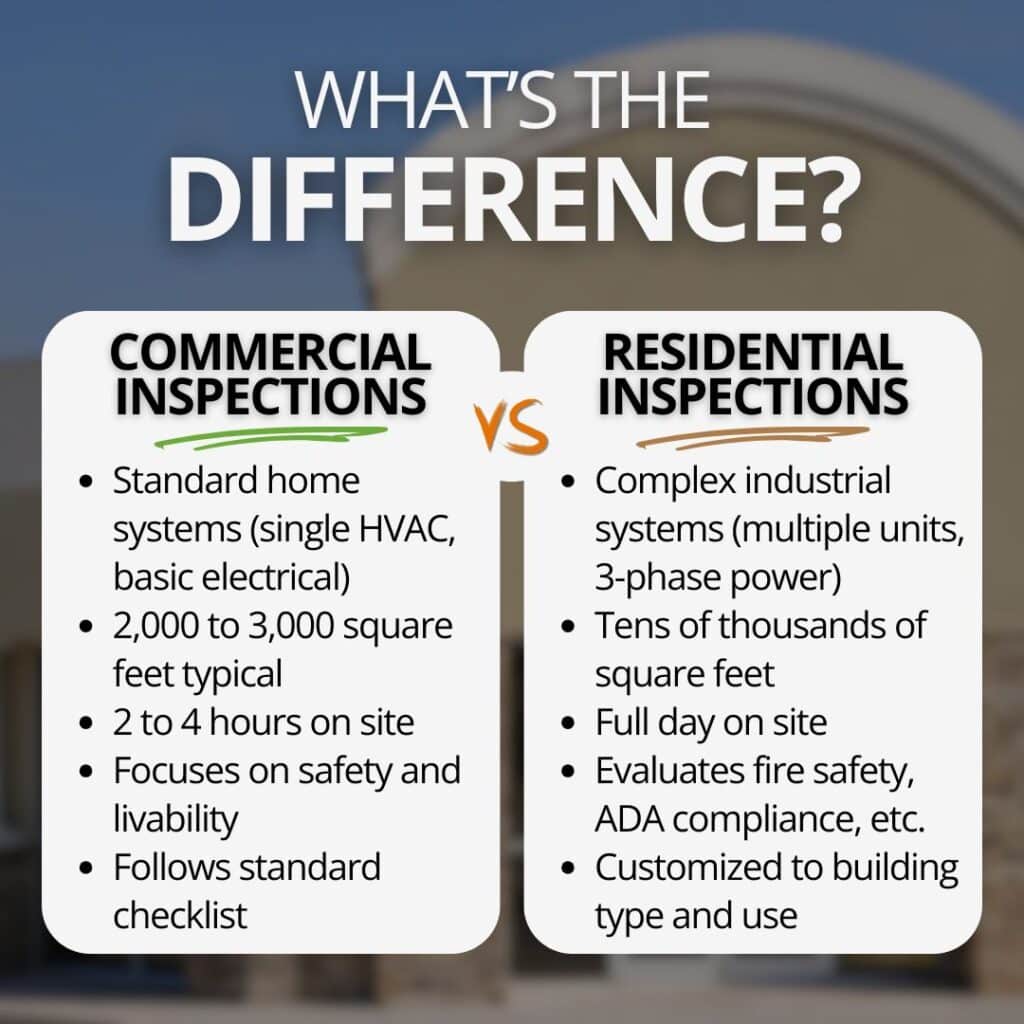
Commercial buildings operate on a different scale than homes. A residential inspection typically covers 2,000 to 3,000 square feet with standard electrical panels, a single HVAC system, and residential-grade plumbing.
Commercial properties can span tens of thousands of square feet with industrial electrical systems, multiple rooftop HVAC units, complex fire suppression networks, and plumbing designed for heavy daily use.
The systems themselves are built differently:
- HVAC units handle climate control for large open spaces or multiple tenant areas
- Electrical systems include three-phase power, emergency lighting, backup generators, and distribution panels that feed entire floors
- Plumbing often includes grease traps, backflow preventers, and infrastructure to support bathrooms across multiple floors
These differences mean inspectors need different training, equipment, and expertise to evaluate structural elements, mechanical systems, and safety features in commercial buildings.
The Scope Is Broader and More Detailed
Residential inspections follow a fairly standard checklist covering foundation, roof, exterior, interior, electrical, plumbing, and HVAC. The process usually takes two to four hours.
Commercial inspections dig much deeper, evaluating:
- Fire safety systems, including sprinklers, alarm panels, exit lighting, and fire-rated doors
- Accessibility features related to ADA requirements for ramps, bathrooms, parking, and building entry
- Environmental concerns like asbestos, underground storage tanks, or soil contamination
- Roof membranes designed for flat or low-slope commercial construction
- Parking lot condition, including drainage, striping, and surface integrity
- Life safety systems and emergency equipment
A commercial inspection for a 10,000 square foot office building in Marshall or Hope can take a full day or longer. Multi-tenant retail centers or industrial facilities might require multiple days and specialized equipment.
Commercial Buildings Are Built to Different Standards
Residential properties follow the International Residential Code (IRC).
Commercial buildings follow the International Building Code (IBC), which has stricter requirements for:
- Structural integrity
- Fire safety
- Occupancy loads
- Accessibility
Inspectors generally do not inspect for code compliance specifically, but these standards shape what we look for during evaluation. They identify visible issues, potential safety concerns, and areas where systems may not be functioning as intended.
Local jurisdictions across Northeast Texas, Southwest Arkansas, and Southeast Oklahoma may have specific requirements.
An inspection team familiar with commercial buildings in your area knows common issues and what typically needs attention in regional properties.
Focus Changes Based on Property Type
The intended use of a commercial property shapes what inspectors prioritize.
A restaurant inspection focuses heavily on kitchen ventilation, grease traps, gas lines, and equipment connections. A medical office emphasizes HVAC filtration and exam room layouts. A warehouse looks closely at loading docks, industrial electrical capacity, and clear height measurements.
Multi-tenant buildings (like apartments or condos) add another layer. Inspectors evaluate common areas, shared mechanical systems, and how modifications by previous tenants might affect the building.
They check whether HVAC zones serve the right areas, if electrical panels are properly labeled, and whether plumbing serves each space adequately.
Investment properties require special attention to deferred maintenance. Many commercial buildings change hands with existing tenants in place, so inspectors work around access limitations while still identifying major concerns that could affect your bottom line.
How to Use Your Commercial Inspection Report
Commercial inspection reports provide detailed information you can leverage throughout the buying process. The report becomes your roadmap for negotiations, budgeting, and long-term planning.
Understanding how findings are categorized helps you prioritize:
- Safety concerns need immediate attention and often become deal points or requirements before closing
- Major system issues affect your operating budget and might justify price reductions
- Deferred maintenance items help you estimate first-year capital expenses
- Minor concerns give you a complete picture, but rarely impact the transaction
The detailed nature of commercial reports also helps you plan ahead. If the HVAC system has three to five years of remaining life, you know to budget for replacement. If the roof shows wear patterns, you can get quotes and negotiate accordingly.
Many buyers use inspection findings to request seller credits, negotiate price reductions, or require specific repairs before closing. The more documentation the inspector provides, the stronger your negotiating position.
Timeline and Process Differences
Residential buyers typically schedule an inspection during their option period and receive a report within 24 to 48 hours. The process is straightforward and moves quickly.
Commercial transactions allow more time because inspections are more involved. Buyers negotiate longer due diligence periods (sometimes 30 to 60 days) to accommodate comprehensive inspections and follow-up evaluations.
This gives you time to coordinate specialized assessments if needed or schedule access to tenant-occupied spaces. That’s especially helpful because the report itself is more detailed.
Where a residential report might run 20 to 30 pages, commercial reports can exceed 50 pages with photos, system diagrams, and detailed descriptions of findings categorized by severity.
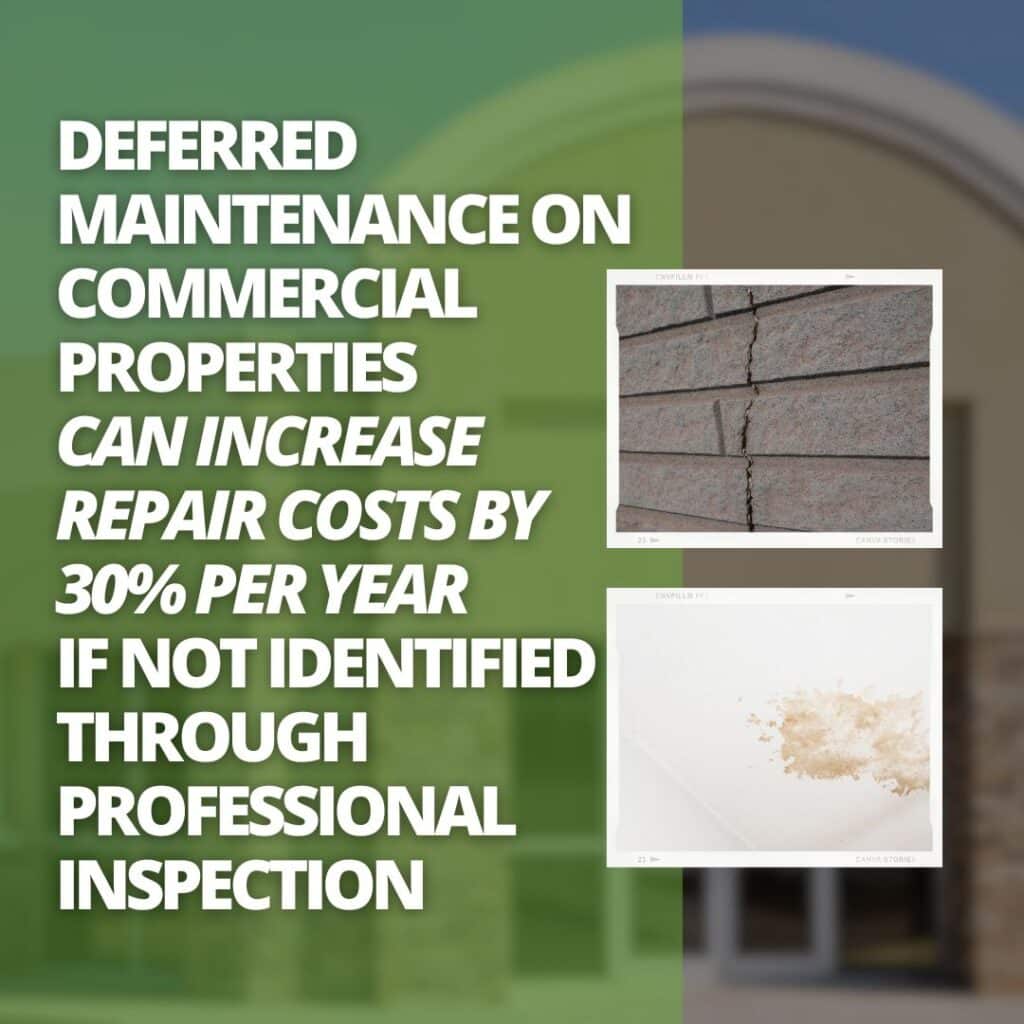
Why Maintenance History and Documentation Matter
Commercial property inspections benefit greatly from documentation. Inspectors review:
- HVAC service records and filter change schedules
- Roof warranties and repair history
- Electrical panel upgrades or modifications
- Fire suppression system testing and certification
- Elevator inspection certificates and service records
- Previous tenant improvement permits
This paper trail helps inspectors understand how the building has been maintained. Missing documentation raises questions about deferred maintenance and can affect your negotiating position.
Buildings across areas like Longview, El Dorado, or McAlester that show consistent maintenance tend to have fewer surprises during inspection.
Those with gaps in documentation often reveal issues that could have been caught earlier with regular service.
Investment Goals Shape What You Prioritize
Residential buyers focus on safety and major systems because they’re planning to live in the home. Commercial buyers evaluate properties as income-generating assets, thinking about ongoing costs, tenant retention, and long-term value.
A commercial inspection helps you understand:
- What repairs or replacements do you need in the next one to three years?
- How much should you budget for deferred maintenance?
- Can current systems support your intended use?
- What upgrades might add value or attract better tenants?
This perspective changes how you read the inspection report. A roof with five years of remaining life might be acceptable if you’re planning a major renovation anyway. HVAC systems nearing end-of-life become negotiating points or capital expense planning considerations.
Other Questions Commercial Buyers Ask
When should I schedule an inspection?
Schedule your inspection during the due diligence period outlined in your purchase contract. This gives you time to review findings, negotiate repairs or credits, and coordinate any additional specialized assessments that might be needed.
How do I know if I need additional specialized inspections?
Your general inspection identifies concerns that might warrant deeper evaluation. Foundation cracks might require a structural engineer. Roof damage could need a roofing specialist. Your inspector can recommend which follow-up assessments make sense based on what they find.
Can I attend the inspection?
Yes, and it’s often helpful. Being present lets you see issues firsthand, ask questions, and better understand the property’s condition. For larger buildings, inspectors might spend several hours on-site, so coordinate timing that works for your schedule.
When to Call a Professional
Schedule a commercial inspection before you’re committed to the purchase. Most commercial contracts include due diligence periods specifically for inspections and evaluations.
What to look for in a commercial inspector:
- Proven experience with commercial properties (not just residential)
- Relevant certifications for commercial building systems
- Familiarity with your specific building type (retail, office, warehouse, etc.)
- Knowledge of regional construction methods and local requirements
For properties across Northeast Texas, Southwest Arkansas, and Southeast Oklahoma, choose an inspector who understands how climate factors like humidity, soil conditions, and weather patterns affect commercial buildings in this region.
Conclusion
Commercial building inspections require specialized knowledge and attention to detail that goes well beyond residential inspection standards. Understanding the differences helps you budget appropriately, negotiate effectively, and plan for long-term property management.
If you’re considering commercial property in Northeast Texas, Southwest Arkansas, or Southeast Oklahoma, start with a thorough inspection that covers everything from structural systems to tenant improvements. The upfront investment in professional inspection often saves tens of thousands in unexpected repairs and strengthens your negotiating position.
Contact Inspection Gator to schedule your commercial property inspection and get the detailed insights you need to make a confident investment decision.