If you’ve knocked on a wooden beam and heard a hollow sound where there shouldn’t be one, that’s worth paying attention to. Wood-eating insects are one of the most quietly destructive forces a home can face, and across Northeast Texas, conditions are ideal for several of the most damaging species around.
Termites alone cost U.S. homeowners an estimated $5 billion each year in control and repairs, and the average homeowner who discovers damage spends around $3,000 out of pocket. Most homeowner’s insurance policies don’t cover it.
That makes early detection and a thorough home inspection two of the most valuable things a buyer or homeowner in this region can invest in.
Whether you’re buying, selling, or maintaining a property, here’s what to know.
What Counts as a Wood-Eating Insect?
Wood-eating insects, often called wood-destroying insects or WDI, are pests that feed on, tunnel through, or nest inside wood. In the real estate world, lenders frequently require a formal WDI inspection before a sale can close.
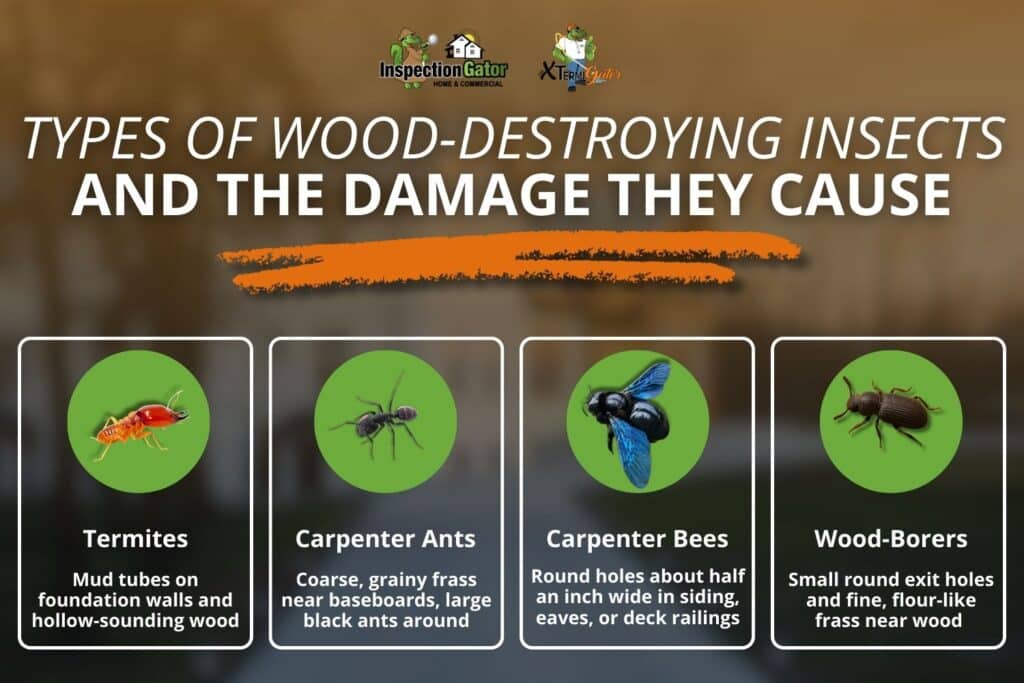
The most common species found in this tri-state area are termites, carpenter ants, carpenter bees, and wood-boring beetles. Each damages wood differently, which means the warning signs differ, too.
Termites
Termites cause more structural damage than any other insect in the U.S., and they’re highly active across East Texas and the surrounding region. Subterranean termites are the most common type here.
They live underground and travel into a home’s wood structure through mud tubes, working from the inside out. Serious damage is often underway long before anything visible appears on the surface.
What to look for:
- Mud tubes on foundation walls, piers, or exterior concrete. These pencil-thin tunnels are one of the clearest signs of subterranean activity.
- Hollow-sounding wood when tapped. Termites eat along the grain, leaving a thin outer shell intact.
- Blistered or bubbled paint on wood surfaces, which can indicate feeding just below the surface.
- Discarded wings near windowsills, doorframes, or light fixtures after a swarm.
- Frass near drywood termite activity: tiny, uniform oval pellets found in small piles.
Colonies typically take more than five years to grow large enough to cause noticeable structural damage, meaning the clock can be running long before you know it.
Carpenter Ants
Carpenter ants don’t eat wood. They excavate it to build nests, and the result can still mean significant structural damage, particularly in wood that’s already been softened by moisture.
These are large, dark-colored ants, typically black or reddish-black, and they’re frequently found around East Texas homes in spring and summer.
Roof leaks, plumbing issues, and poorly ventilated crawl spaces all create the damp conditions they prefer.
What to look for:
- Coarse frass near baseboards, window frames, or door casings. Grainy in texture, sometimes containing insect parts, unlike the fine pellets termites leave.
- Large black ants appear inside, especially near moisture-prone areas like kitchens and bathrooms.
- Smooth, clean galleries inside damaged wood, as opposed to the rough, soil-packed tunnels termites create.
- Rustling sounds inside walls at night, when carpenter ants are most active.
Repeated sightings indoors almost always point to a moisture problem nearby. Finding the ants is the first clue; finding what’s drawing them in is what matters most.
Carpenter Bees
Carpenter bees are a common sight on porches, decks, and wooden fences throughout the region, especially in warmer months.
They bore perfectly round holes into unfinished or weathered wood to nest, and over time, multiple generations reuse and expand the same galleries, compounding damage year after year.
What to look for:
- Round holes roughly half an inch in diameter in siding, eaves, deck railings, or fascia boards.
- Yellow or brownish staining below entry holes from pollen and waste.
- Fine sawdust or debris directly below active holes.
- Hovering bees near wooden exterior surfaces in spring.
Carpenter bee damage is most commonly noted at eaves, fascia, and porch structures, particularly on homes with a lot of natural or untreated exterior wood.
Wood-Boring Beetles
Wood-boring beetles are less commonly discussed but can cause serious damage, especially in older homes with hardwood floors, antique timber framing, or untreated wood. Common species in this region include the powderpost beetle, the old house borer, and the deathwatch beetle.
These beetles spend most of their lifecycle inside the wood itself. Larvae tunnel through it for months or even years before emerging as adults. By the time exit holes appear on the surface, the interior damage has often been building for a long time.
What to look for:
- Small round exit holes in wood surfaces, ranging from about 1/16 to 3/8 of an inch, depending on species.
- Fine, flour-like frass near or below holes, characteristic of powderpost beetle activity.
- Unexplained damage in hardwood floors or structural beams that doesn’t follow a moisture pattern.
- A faint ticking or tapping sound in walls or floors, sometimes associated with larger species like the old house borer.
How Home Inspections and WDI Inspections Work Together
A standard home inspection and a formal WDI inspection are two different services, and understanding the difference matters when you’re buying or selling in this region.
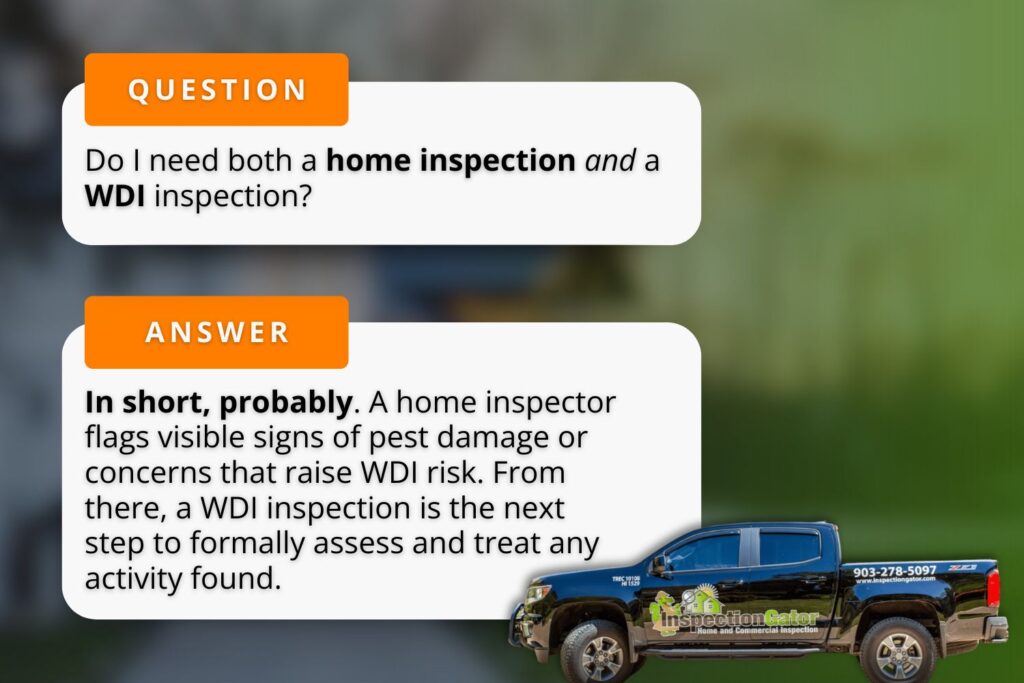
During a home inspection with Inspection Gator, your inspector evaluates the visible and accessible structural components of the property, including the crawl space, attic, foundation area, and framing. They’ll flag visible signs of pest damage, note moisture conditions that increase WDI vulnerability, and identify anything that warrants further evaluation.
In Texas, it requires a licensed pest control professional to certify a formal WDI report. That’s where XTermiGator comes in. As the sister company to Inspection Gator, XTermiGator handles certified Texas WDI inspections and treatments.
If an Inspection Gator report identifies damage or risk conditions consistent with wood-destroying insect activity, theXTermiGator is the next call, with the licensing, expertise, and local knowledge to assess the problem and address it properly.
For buyers and sellers in Texarkana, Marshall, Longview, Tyler, and throughout NE Texas, this means one connected team handles both sides of the picture.
Related Questions
Should I get a home inspection on a newly built home?
Yes. New construction inspections can catch conditions like wood debris near the foundation or inadequate drainage that increase termite exposure before a problem develops.
What does a home inspector look for when it comes to pest damage?
Inspectors evaluate visible structural components throughout the property, including the crawl space, attic, and framing, noting evidence of pest damage, wood rot, and moisture conditions that increase WDI vulnerability.
What other issues commonly appear alongside pest damage?
Moisture intrusion, wood rot, ventilation problems, and foundation concerns frequently show up in the same areas as WDI activity. A full inspection report helps buyers and homeowners understand how these conditions connect.
When to Call a Professional
If you’re seeing any of the warning signs covered in this post, including mud tubes, hollow-sounding wood, suspicious frass, round bore holes, or large black ants appearing repeatedly inside your home, don’t wait to have it looked at.
Wood-eating insects don’t resolve on their own, and in most cases, the damage accelerates the longer an active infestation goes unaddressed.
A professional home inspection is a smart first step for any buyer, seller, or homeowner who wants a clear picture of a property’s condition.
From there, if the inspection turns up visible WDI damage or conditions that raise concern, a certified WDI inspection through theXTermiGator is the right next move for Texas properties.
Conclusion
Wood-eating insects are a persistent concern for homes across the region. Our warm climate, high humidity, and wood-heavy construction common to this region create an elevated risk environment for termites, carpenter ants, carpenter bees, and wood-boring beetles alike.
Knowing the warning signs puts you in a much stronger position, whether you’re buying, selling, or simply staying ahead of problems in a home you already own.
A professional home inspection gives you a clear, documented picture of a property’s condition, including moisture concerns and risk factors that often point to WDI activity before it becomes a costly problem.
Ready to get started? Schedule your inspection with Inspection Gator online anytime.