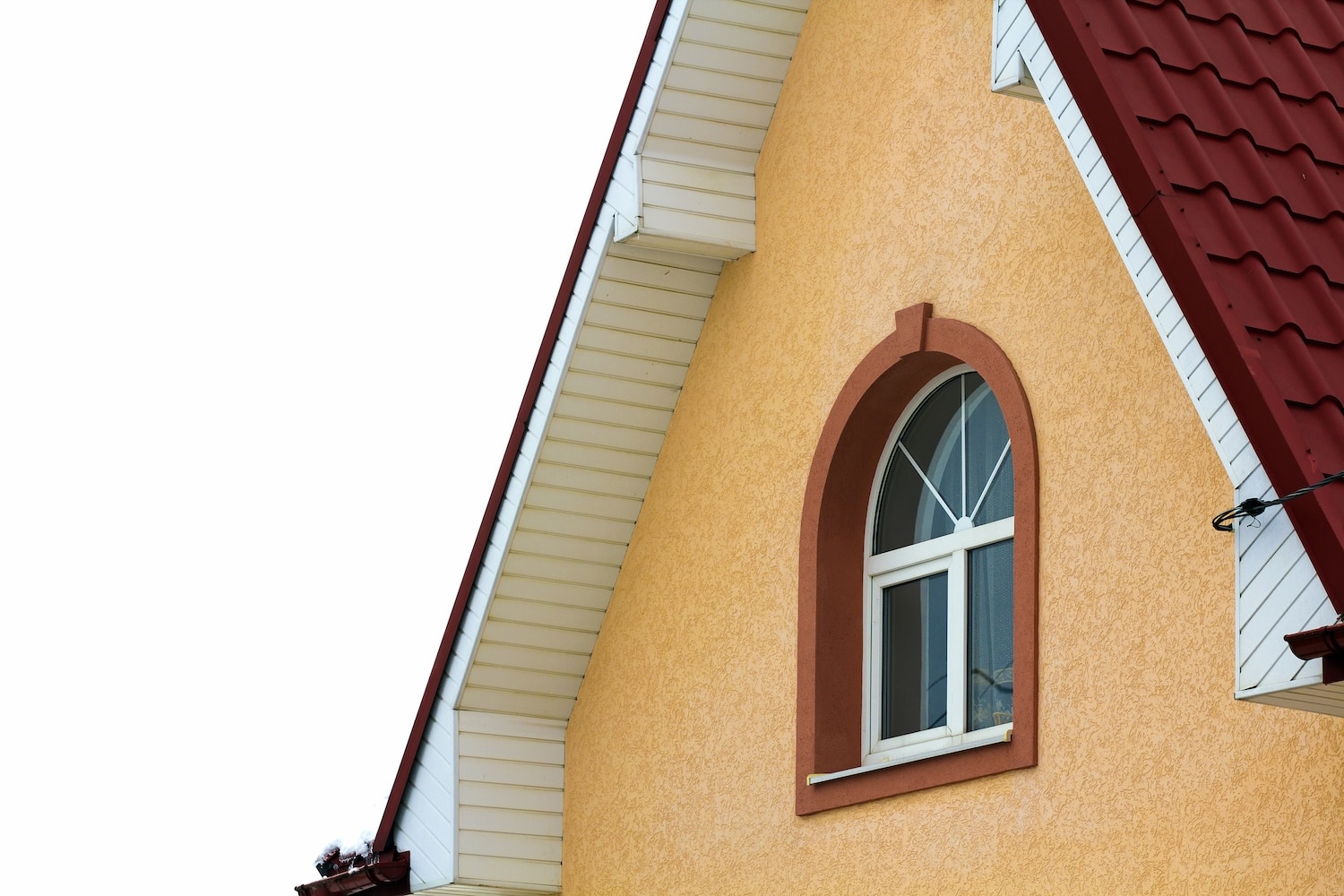
If you’ve seen a home with a smooth, stucco-like exterior and wondered what it’s actually made of, there’s a decent chance it was EIFS construction. From the street, it can look clean and well-kept.
But in areas like Northeast Texas, Southwest Arkansas, and Southeast Oklahoma, where heat and humidity are facts of life, EIFS has a track record that gives buyers, sellers, and home inspectors real reason for concern.
Here’s what EIFS is, why it tends to struggle in hot and humid climates, and what you should know before buying or selling a home that has it.
What Is EIFS Construction?
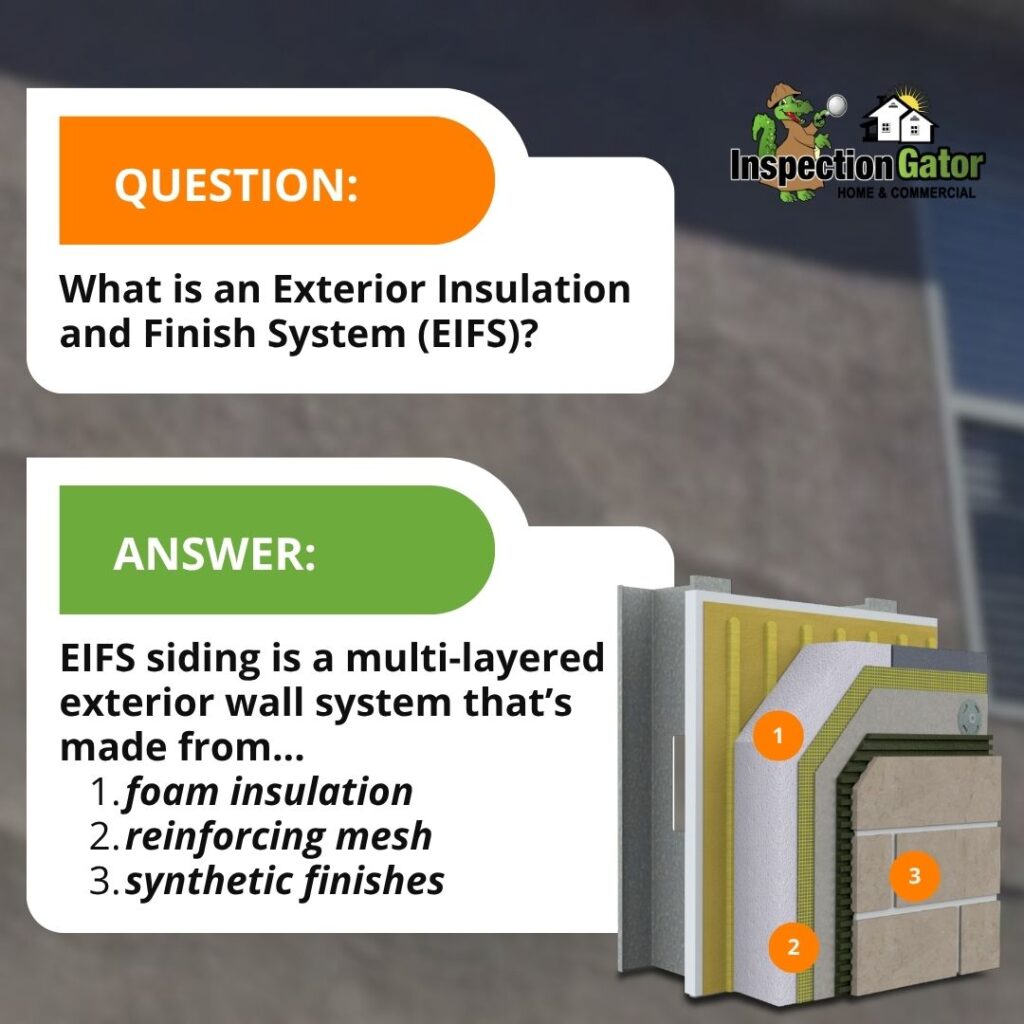
EIFS stands for Exterior Insulation and Finish System.
It’s a multilayered wall cladding that includes rigid foam insulation, a fiberglass mesh base coat, and a textured synthetic finish. The result looks a lot like traditional stucco, and that’s where a lot of confusion starts.
Traditional stucco is cement-based and breathable. Moisture that gets in can work its way back out. EIFS is synthetic and tightly sealed. That seal is part of what makes it energy efficient, but it’s also what makes it problematic when water finds a way in.
EIFS became popular in U.S. residential construction during the 1980s and 1990s. The problems surfaced later, when homeowners discovered hidden rot, mold, and structural damage behind exteriors that still looked fine from the outside.
There are two main types:
| Type | How It Works | Key Risk |
| Barrier EIFS | Relies entirely on a sealed surface to keep water out | No drainage path if water gets behind it |
| Drainage EIFS | Includes a water-resistive barrier and drainage layer | Less risky, but still depends on proper installation |
Older homes built before 2000 are much more likely to have barrier-style EIFS. Drainage systems became more common after the industry acknowledged how widespread the moisture issues were.
Why Hot and Humid Climates Make EIFS Problems Worse
EIFS doesn’t perform equally in every climate. In hot, dry regions with low rainfall, a barrier system can hold up reasonably well. In hot and humid climates, it’s essentially the opposite of what EIFS needs to perform safely.
Here’s why this region is particularly hard on it…
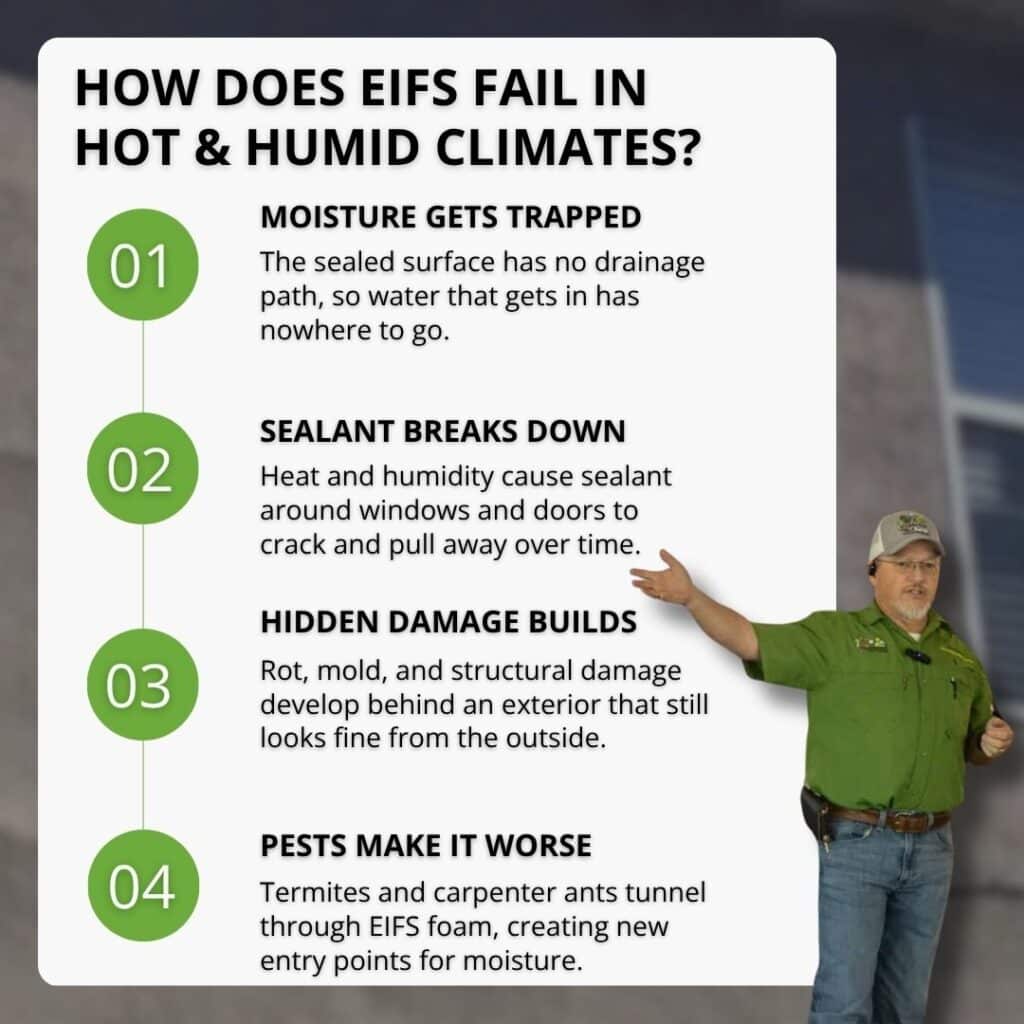
- High humidity means slow drying: When moisture gets behind EIFS, the surrounding air needs to be dry enough to help the wall assembly dry out. In NE Texas and the surrounding region, outdoor humidity is high for much of the year. Moisture that gets trapped tends to stay trapped longer, doing more damage.
- Heat and air conditioning create vapor drive: The temperature gap between hot outdoor air and a cooled interior pushes moisture toward cooler wall surfaces. In a tightly sealed assembly like barrier EIFS, that condensation has nowhere to go.
- Frequent rain and storms mean repeated exposure: The Ark-La-Tex sees consistent rainfall and severe weather seasons with driving rain and high winds. Wind-driven rain is one of the most common ways water gets behind EIFS, especially around windows, doors, and roof-to-wall transitions, where sealants tend to crack first.
- Wood-destroying insects are already a problem in this region: EIFS foam can be tunneled through by termites and carpenter ants, creating new entry points for moisture. In a region with high termite pressure, that’s not a minor concern.
Where Does EIFS Fail Most Often?
EIFS doesn’t usually fail in the middle of a large flat wall. It fails at transition points where it meets another material and where sealants carry the most load.
The most common failure points:
- Windows and doors: Sealant shrinks, cracks, and pulls away over time. Once that seal goes, water enters at one of the wall’s most vulnerable points.
- Roof-to-wall intersections: Missing or improperly installed flashing and kickout diverters send roof runoff directly behind the cladding.
- Ground-level installation: EIFS isn’t designed to sit at or near grade. Soil contact and splash-back add moisture exposure. Mulch piled against EIFS walls makes this significantly worse.
- Deck and balcony attachments: Ledger boards and other wall attachments create penetrations that are often improperly sealed.
- Utility penetrations: Pipes, outlets, and hose bibs all require careful sealing. These small gaps are easy to overlook during a basic visual inspection.
What Buyers and Sellers Should Know
A standard home inspection is a visual inspection. EIFS problems are often completely invisible from the surface. The exterior can look intact while significant moisture damage is building behind it.
For Buyers
If you’re looking at a home in the Texarkana area, Longview, De Queen, Broken Bow, or anywhere in between, and it has EIFS on the exterior, ask for any previous inspection or repair records. Find out whether it’s a barrier or drainage system and when it was installed.
Consider requesting a moisture assessment to check for elevated moisture levels. Moisture meter testing can detect elevated levels in the wall assembly without tearing into walls.
Also worth knowing: some lenders require additional documentation for homes with EIFS, and some insurance carriers in Texas either exclude EIFS-related damage or charge higher premiums for it.
For Sellers
Getting ahead of the issue before listing is far better than having it surface during the buyer’s inspection. Schedule a pre-listing assessment that specifically addresses the EIFS system.
Repair any damaged sealant and address moisture concerns before the home is shown. Disclose the presence of EIFS honestly, including system type and age if known.
Sellers who skip this step and buyers who discover issues late in the transaction tend to end up in a worse position, financially and otherwise.
Maintenance Tips for EIFS Homeowners
If you already own a home with EIFS, consistent maintenance is the best way to extend the system’s life and catch problems early.
- Inspect and reseal all joints, transitions, and penetrations every two to three years, or any time you notice cracking or separation.
- Keep mulch, landscaping, and soil away from the base of EIFS walls.
- Direct sprinklers, downspouts, and drainage away from EIFS surfaces.
- After severe storms, walk the exterior and check for new cracks, impact damage, or areas where sealant has separated.
- Avoid attaching anything directly to EIFS without proper backing and sealing.
Related Questions
What do home inspectors actually look for on the exterior of a home?
A lot more than most people expect. Inspectors evaluate siding, flashing, grading, drainage, windows, doors, and roof-to-wall transitions, among other things. Exterior issues are some of the most common findings on home inspection reports in this area.
Are termites a concern with certain types of exterior siding?
Yes. Some siding materials, including EIFS foam, can attract or provide cover for wood-destroying insects. A separate termite inspection is worth considering any time exterior siding raises questions, especially in NE Texas and surrounding areas, where termite activity is consistently high.
What is a new construction inspection, and when does it happen?
New construction inspections happen at key phases of the build, before walls are closed up and again before the final walkthrough. They catch installation issues, including exterior cladding problems, before they become hidden and expensive.
What happens if moisture damage is found during a home inspection?
The inspector documents it in the report. From there, buyers typically negotiate repairs or credits, or they may request a specialist to assess the extent of the damage. Sellers who already know about issues and have addressed them are in a much stronger position.
When to Call a Professional
EIFS isn’t something to take a wait-and-see approach with, especially in this part of the country. Call a professional if:
- You’re buying a home with EIFS and want a moisture assessment beyond a visual inspection.
- You’re preparing to sell and want to get ahead of any issues before buyers find them.
- You’ve noticed soft spots, staining, cracks, or gaps around windows, doors, or roof transitions.
- You’ve had recent storm damage, pest activity, or new penetrations made through the wall.
At Inspection Gator, our inspectors have seen firsthand what EIFS problems look like in homes across NE Texas, SW Arkansas, and SE Oklahoma. The damage is almost always worse than it looks from the outside, and catching it early makes a significant difference in what it costs to fix.
Conclusion
EIFS construction isn’t automatically a dealbreaker, but in a hot, humid climate, it comes with real risks that deserve serious attention. The system was built to insulate and protect, but when it’s poorly maintained or simply aging in conditions it wasn’t designed to handle well, the damage it hides can be costly.
Whether you’re buying, selling, or maintaining a home with EIFS in the Ark-La-Tex region, the right inspection makes all the difference. Inspection Gator is here to help you go into your next real estate decision with confidence. Schedule your inspection today.